
Azuki TCG: From Web3 Roots to Tabletop Reality – Everything You Need to Know
Welcome back to CardCore.xyz! Today we’re diving into one of the most talked-about new arrivals in the trading card game space: the Azuki TCG. Released to retail this June 2026 with its inaugural set, Gates Awakened (AZK-01), the game has already generated massive buzz—and a fair share of skepticism. Let’s break down how this digital-born franchise is translating to physical cardboard.
The Aesthetic and The Origins First, let’s address the elephant in the room: Azuki started as a highly lucrative, and occasionally controversial, Web3 NFT project created by Chiru Labs. Following some turbulent history involving the founder’s past crypto projects, Chiru Labs pivoted hard into traditional entertainment, creating an analog physical card game to legitimize the IP. The art direction is helmed by Arnold Tsang, the former Character Art Director for Overwatch, resulting in a stunning cel-shaded anime aesthetic. Every card begins as hand-drawn line art, and the production quality is heavily praised, featuring intricate layers and a proprietary “Bean Foil” texture for high-end chase cards.
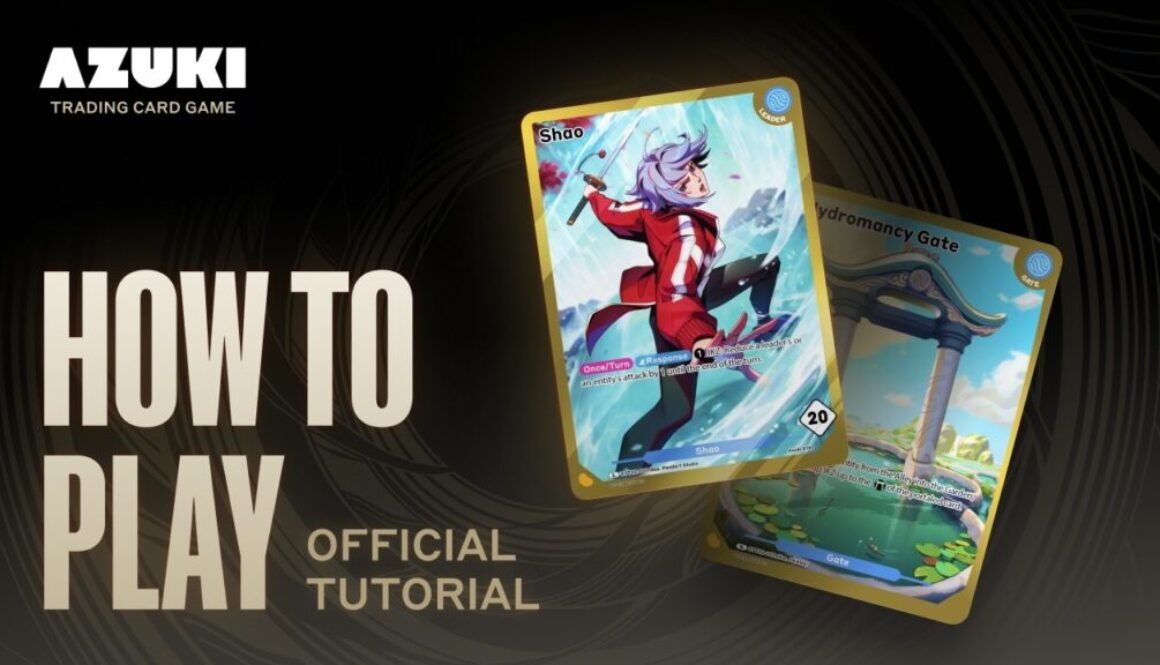
How Does It Play? Designed by game director Jon Chao (formerly of Riot Games and Ubisoft), the Azuki TCG blends modern resource mechanics with tactical spatial positioning. It is a two-player game featuring 50-card decks built around a specific elemental Leader and a Gate.
-
The IKZ Resource System: Say goodbye to “mana screw.” Similar to Hearthstone or One Piece, players use a separate 10-card deck of IKZ resource cards. You gain one IKZ automatically every turn, which you tap to pay for cards and abilities. To balance the advantage of going first, the second player gets a one-time-use IKZ token for early tempo.
-
The Garden and the Alley: The battlefield is divided into two horizontal rows. The “Alley” is your protected back row where you safely stage Entities. The “Garden” is the active front row where all the combat happens.
-
The Gate Mechanic: Once per turn, your Gate card allows you to “portal” an Entity from the Alley into the Garden. Doing so triggers a unique effect based on the portaled Entity’s “Gate Power,” creating a tense strategic balance between immediate front-line aggression and setting up massive combo turns in the back row.
Getting Started: Sets and Decks Gates Awakened features 148 unique cards spread across four elemental domains: Fire, Water, Earth, and Lightning. If you’re looking to jump in, there are four accessible starter decks priced at $12.99: Raizan (Lightning/Aggro), Shao (Water/Control), Bobu (Earth/Ramp), and Zero (Fire/Burst). Booster boxes run for roughly $119.99 and are distributed through traditional hobby channels like GTS.
Organized Play is Already Here History shows that indie TCGs live or die by their organized play, and Azuki is coming out swinging. They’ve committed a $100,000 prize pool for their inaugural season and partnered with CoreTCG—a veteran organizer known for massive Bandai and Yu-Gi-Oh! events—to handle regional and national tournaments. To tie it all together, there’s a highly polished Azuki TCG companion app for iOS and Android. The app lets players find local events, track match history, and climb both a “Participation Leaderboard” and a “Winner Leaderboard” to earn exclusive season-end rewards.
The Verdict While traditional tabletop gamers might be wary of the game’s crypto origins, Azuki TCG is making a strong case that it wants to be judged on the merit of its gameplay. There are no NFTs required to play the actual game; you buy physical packs with fiat currency at your local game store just like Magic or Pokémon. With its deep mechanics, gorgeous art, and massive organized play subsidy, Azuki is trying to prove it belongs in the local game store pantheon.
Let us know in the comments if you’ve sleeved up a deck yet, and stay tuned to CardCore.xyz for more TCG news and deck tech!