Grading in 2026: When PSA, SGC, or BGS Actually Makes Sense
If you collect long enough, you learn this fast: grading does not automatically create value. In 2026, with tighter margins, grading fees, and smarter buyers, you need a real plan before submitting.
This guide breaks down when grading is worth it, when to skip it, and how to run a quick break-even check before you spend a dollar.
The Big Rule: Grade for Spread, Not Hope
The only reason to grade a card is to create a meaningful value spread between raw value (what you could sell now) and graded value (after fees, shipping, and time). If that spread is not there, grading is expensive optimism.
Quick Break-Even Formula
Net Graded Value = Expected graded sale price − grading fee − shipping/insurance − platform fees − taxes (if applicable)
Then compare Net Graded Value versus Raw Sell Value. If the net uplift is small, skip it. If the uplift is strong and realistic for your expected grade, submit.
When Grading Usually Makes Sense
High-value rookies and key inserts with proven graded premiums.
10% speculative or personal-collection submissions
Final Take
In 2026, grading is still a powerful tool, but only when used with discipline. The collectors making money are not grading everything. They are grading selectively, tracking net outcomes, and avoiding emotional submissions.
The card market in 2026 is no longer one monolithic market. It behaves as a multi-speed ecosystem with different risk levels by segment:
Tier 1: Scarce, iconic, high-grade cards with relatively resilient demand.
Tier 2: Mid-range modern cards with tradable liquidity but higher volatility.
Tier 3: Mass-produced modern base and over-segmented parallels with elevated downside risk.
CardCore’s conclusion: this is not a full-system collapse setup today, but there are localized bubble conditions where supply depth and speculative behavior are outpacing durable collector demand.
1) Is This a Bubble, Correction, or Structural Regime Shift?
The most evidence-supported framing is a structural regime shift:
Post-hype normalization after the 2020-2022 spike
Capital concentrating into blue-chip scarcity
Higher buyer sophistication around comps, pop counts, and print behavior
Widening divergence between social hype and executable liquidity
In short: bubble pockets + correction zones + resilient scarcity lanes can all exist simultaneously.
2) Structural Risk Drivers
A. Overproduction and Over-Segmentation
The modern risk is no longer just print volume. It is SKU proliferation: too many parallels, serial tiers, inserts, and pseudo-scarcity variants competing for the same buyer budget.
B. Liquidity Illusion
During momentum phases, list prices can outrun real bids. Collectors mistake screen value for realizable value, then discover spread expansion when they try to exit.
C. Distribution and Restock Shock
Supply shortages trigger panic premium buying. Later restocks can compress secondary prices quickly, especially in products lacking long-term collector stickiness.
D. Grading Economics Compression
Higher grading costs and tighter standards raise break-even points and reduce margin for speculative flips.
E. Attention Cycles Over Fundamentals
Some price surges are driven more by creator/influencer velocity than by deep collector ownership. When content cadence slows, demand can cliff.
3) Risk Matrix
Lower Risk
Truly scarce high-grade cards with multi-cycle demand history
Blue-chip vintage and culturally iconic assets
Moderate Risk
Selective modern rookies with durable narrative and collector depth
Serialed cards where scarcity is matched by sustained demand
Higher Risk
Mass modern base from high-print releases
Late-entry buys during social-media parabolic phases
“Scarce on paper” cards with weak bid depth
4) Scenario Outlook (12–18 Months)
Base Case: Controlled Consolidation (55%)
Blue-chip scarcity remains comparatively stable; speculative modern reprices lower.
Bear Case: Sharp Spec Unwind (25%)
Inventory overhang plus restock normalization drives sudden repricing in high-beta modern categories.
Bull Case: Liquidity Re-Expansion (20%)
Strong rookie classes, franchise catalysts, and cleaner distribution restore broad risk appetite.
5) Leading Indicators CardCore Is Tracking
Sell-through rates vs. listed prices
Bid-ask spread behavior on key comps
Restock cadence and MSRP-secondary compression
Grading submission selectivity and turnaround economics
LGS event participation consistency
Time-to-sale for mid-tier inventory
Sentiment divergence between content feeds and completed sale data
Tactical (20-35%): Select modern opportunities with predefined exits
Speculative (5-15%): Controlled budget for momentum/rip exposure
Risk Controls
Buy on liquidity, not just narrative
Model all-in cost basis (fees, shipping, grading, taxes)
Avoid position concentration in a single release window
Pre-commit exit rules before entry
7) Bottom Line
The 2026 card market is best viewed as a selective risk cycle, not a universal bubble burst. Weak inventory is likely to continue repricing; true scarcity should remain more resilient. In this environment, disciplined collectors who prioritize liquidity, quality, and sizing will outperform reactionary hype flows.
Riftbound is officially in its “prove it” era—and the hype feels earned. Riot’s TCG has moved past launch novelty and into the part that really matters for collectors and competitive players: set cadence, supply stability, and expansion depth.
Right now, the current state of Riftbound looks like this: strong gameplay buzz, real demand, some ongoing product availability friction, and a first expansion cycle that has the community very, very loud.
Where Riftbound Stands Right Now
Based on Riot’s State of the Game (Feb. 2026), the team is seeing healthy competitive and casual engagement across Origins and Spiritforged. Riot highlighted local event growth (like Nexus Nights), early Regional Qualifiers, and strong resonance around Riftbound’s battlefield/resource system.
At the same time, Riot acknowledged what players already know: supply and ordering friction are still real issues they are actively working to improve.
CardCore read on the current state:
Gameplay momentum: Strong.
Community sentiment: Excited but demanding.
Supply confidence: Improving, not solved.
Competitive future: Promising, with clear organized-play intent.
Why the First Expansion Cycle Matters So Much
Every new TCG gets judged hardest at Set 2 and Set 3. Launch can ride novelty. Expansion cycles test staying power.
With Spiritforged now established as the first post-launch expansion and Unleashed on deck, Riftbound is entering the phase where players decide whether this is a quick fling or a long-term hobby lane.
According to Riot’s 2026 Roadmap, the release tempo is aggressive and confidence-building:
Spiritforged (Set 2): English release in February 2026
Unleashed (Set 3): May 8, 2026
Vendetta (Set 4): July 31, 2026
Radiance (Set 5): October 2026 window
That pace is exactly what collectors want to see from a serious ecosystem—regular content without year-long droughts.
Excitement for the First Expansion Is Real
The first expansion wave is bringing the two ingredients that fuel card-game growth: new mechanics and new fan-favorite characters. Early coverage from outlets like IGN has emphasized how this set cadence could define Riftbound’s long-term trajectory if Riot keeps execution tight.
For the hobby side, that means:
More deck innovation and brewing pressure
Fresh chase cards and renewed sealed interest
More local-store event stickiness
A clearer signal on what “evergreen” Riftbound demand may look like
The Big Risk to Watch
Momentum can evaporate quickly in TCGs if players can’t reliably get product at fair prices. Riot has publicly addressed this, which is a positive sign—but 2026 execution will decide whether Riftbound becomes a durable top-tier lane or a boom-and-frustration cycle.
CardCore Final Take
Riftbound’s current state is net bullish: the game has energy, structure, and a roadmap that looks like a real long-term commitment. The first expansion cycle is exactly where Riftbound needed to show confidence, and so far it has.
If supply normalizes and organized play keeps expanding, the excitement around this first expansion could be the foundation for Riftbound’s strongest growth year yet.
The Pokémon brand just hit a massive milestone, and collectors are already feeling the ripple effects across sealed product, singles, and long-term hobby demand. The Pokémon 30th anniversary is more than nostalgia—it is a market-moving moment for card collectors.
If you are building a smart Pokémon position in 2026, this is the window to focus on discipline: buy quality, avoid hype traps, and prioritize products with real collector demand.
Why the Pokémon 30th Anniversary Matters for Collectors
Major franchise anniversaries tend to pull three groups into the market at once: longtime collectors, casual returning fans, and speculative buyers. That combination increases attention and liquidity, especially for recognizable characters and premium sealed formats.
Nostalgia buyers return and chase iconic Pokémon.
Content velocity spikes across YouTube, TikTok, and hobby media.
Retail demand rises for beginner-friendly products.
Singles volatility increases as new money rotates into familiar names.
What to Buy (Without Overpaying)
For most collectors, the best move is balancing fun rips with disciplined holds. Focus on products with broad audience appeal and stable long-term demand.
1) Elite Trainer Boxes (ETBs)
ETBs remain one of the strongest all-around entries for display value, opening experience, and broad giftability.
Buy: Products you would still be happy owning if prices cool for 6–12 months.
Hold: Sealed from strong sets with evergreen character demand.
Rip: A controlled percentage for fun and content, not your entire budget.
A practical split for most hobbyists is 60% hold, 30% singles, 10% fun-rip budget. Adjust based on your risk tolerance.
Big Mistakes to Avoid During Anniversary Hype
Buying at peak social hype without checking comps.
Ignoring product quality and chasing only buzzwords.
Overextending budget in the first wave of releases.
Forgetting fees, shipping, and grading timelines in expected profit.
Final Take
The Pokémon 30th anniversary is shaping up as one of the most important hobby moments of the year. If you stay selective and avoid emotional FOMO buys, this cycle can be a great time to improve your collection and your long-term position.
Disclosure: This article contains affiliate links. CardCore may earn a commission if you buy through these links, at no extra cost to you.
The hobby just crossed a threshold few thought possible. In a move that instantly redefines the modern chase card era, Topps has confirmed that an authentic 1952 Topps Mickey Mantle—yes, the card—will be awarded via a redemption hidden inside a random pack of 2026 Topps Series 1.
Not a reprint. Not a parallel. Not a buyback facsimile.
A real, original, historically significant piece of baseball—and American—culture.
To preserve the condition of the card, the Mantle itself won’t be physically placed in a pack. Instead, one lucky collector will pull a redemption card that can be exchanged for the original. The result is the most audacious bridge yet between vintage mythology and modern pack-ripping culture.
And it lands tomorrow.
Why the 1952 Mantle Still Reigns Supreme
The Mickey Mantle 1952 Topps card occupies a category of its own. Though technically not Mantle’s rookie—Bowman released a card the year prior—it has become the defining artifact of the baseball card hobby.
The reasons are layered:
Design legacy: The 1952 Topps aesthetic established the template modern cards still follow—bold photography, clean layout, player stats on the back.
Cultural timing: Post-war America, television, and baseball’s golden age collided.
Mythology: Unsold cases reportedly dumped into the ocean, forever shrinking supply and amplifying legend.
Performance + persona: Mantle embodied power, grace, and tragic brilliance in a way few athletes ever have.
This isn’t just a card. It’s the Mona Lisa of cardboard.
The Value: From Six Figures to Eight
Even battered, low-grade examples of the 1952 Mantle routinely command six-figure prices. At the high end, the card has rewritten the record books.
In August 2022, a PSA 9.5 example sold for $12.6 million, becoming the most expensive sports collectible ever sold at auction—cards or memorabilia included.
That sale didn’t just set a record. It permanently repositioned sports cards alongside fine art, rare watches, and blue-chip assets.
https://x.com/Topps/status/2021339778281550290
Why This Matters for 2026 Topps Series 1
By inserting a redemption for the Mantle into Topps Series 1, Topps has effectively turned a flagship modern release into a once-in-a-generation lottery ticket.
This does several things at once:
Explodes wax demand: Even casual collectors now have a reason to rip.
Re-centers the hobby: It reminds everyone that modern collecting ultimately traces back to vintage roots.
It’s also a signal. Topps—now operating in the Fanatics era—is willing to take bold, almost theatrical swings to keep the hobby culturally relevant.
Keep It or Cash It?
The collector who finds the redemption faces an impossible (and wonderful) decision.
Hold it as a once-in-a-lifetime heirloom.
Sell it and secure generational wealth.
Exhibit it, loan it, or insure it as a cultural artifact.
There is no wrong answer—only history.
The Bigger Picture: Vintage Meets the Modern Era
This moment isn’t just about one card. It’s about the convergence of eras.
Modern collectors raised on parallels, serial numbers, and social-media-fueled breaks are now being pointed back to the foundation. Vintage collectors, long skeptical of modern hype, are being pulled back into the present.
For a brief moment, the entire hobby is aligned—eyes on packs, hearts on history.
And somewhere out there, in a sealed box of 2026 Topps Series 1, cardboard immortality waits.
TL;DR
Topps has inserted a redemption for an authentic 1952 Mickey Mantle card into a random pack of 2026 Topps Series 1, creating the most significant chase card in modern hobby history. With past sales reaching $12.6M, this move bridges vintage legend and modern collecting in a way the hobby has never seen before.
The baseball card market in 2026 stands at a historic crossroads, defined by the 75th anniversary of Topps and a structural shift in how the hobby balances tradition with modern speculative investment. This “Diamond Jubilee” year is not merely a marketing label but a pivot point for the industry, as Fanatics-led Topps attempts to unify disparate collector generations through a release calendar that emphasizes nostalgia while embracing the “experience economy”.1 The primary catalyst for this year’s market movement is the launch of 2026 Topps Series 1, a product steeped in history that effectively sets the tone for the annual collecting cycle.1 As the institutional backbone of the hobby, the 2026 flagship release represents a comprehensive effort to bridge the gap between vintage reverence and the high-gloss demands of contemporary breaking culture.4
Institutional Release Cadence and the 2026 Calendar
The 2026 calendar is structured to maintain constant market liquidity, beginning with high-volume flagship releases and transitioning into premium chrome technology and prospect-heavy sets. The sequencing reflects a strategic intent to capture collector attention during critical windows, such as Spring Training and the mid-summer Fanatics Fest.6 While Topps remains the dominant force, secondary players like Panini, Leaf, and Upper Deck continue to occupy specialized niches, particularly in prospecting and multi-sport “heroes” sets.6
Primary 2026 Baseball Release Schedule and Market Entry Points
Anticipated Release Date
Collection Name
Market Category
Primary Configuration
2026-01-13
2026 Topps Series 1 (Pre-order)
Flagship
Web Exclusive 3
2026-01-26
Topps Museum Collection
High-End
Hobby Box 9
2026-02-11
2026 Topps Series 1 (Full Release)
Flagship
Hobby, Jumbo, Retail 3
2026-02-11
2026 Leaf Metal Super Sports Heroes
Multi-Sport
6-Box Case 8
2026-02-13
2025 Panini Prospect Edition
Prospecting
20-Box Case 8
2026-02-13
2025 Leaf In The Game Used Sports
Memorabilia
10-Box Case 8
2026-02-18
2025 Topps Stadium Club
Photography
Hobby & Blaster 8
2026-04-25
2026 Topps Heritage Baseball
Nostalgia
1977 Design 12
2026-05-07
2026 Bowman Baseball
Prospecting
1st Bowmans 14
2026-07-16
Fanatics Fest NYC Exclusives
Event-Specific
Special Drops 7
2026-09-10
2026 Bowman Chrome Baseball
Premium Prospect
Hobby & HTA 15
The early year focus is dominated by 2026 Topps Series 1, which officially releases on February 11.6 This date serves as the “unofficial start” to the baseball season, where the intersection of off-season transactions and the arrival of new rookie cards creates a peak in consumer engagement.3 The release is preceded by a museum-quality high-end drop in late January, which satisfies the appetite of premium collectors before the mass-market flagship arrival.9
Flagship Analysis: 2026 Topps Series 1 Design and 75th Anniversary Strategy
The 2026 Topps Series 1 release is the centerpiece of a year-long campaign celebrating 75 years of baseball card manufacturing, a milestone dating back to the company’s 1951 debut.1 The branding strategy for this anniversary utilizes a multi-generational cover art philosophy, featuring Hank Aaron and Ken Griffey Jr. alongside modern icons Shohei Ohtani and Aaron Judge.1 This deliberate selection of “all-time greats” and “active legends” is designed to create a sense of historical continuity, ensuring that collectors of all eras feel a connection to the 2026 flagship design.1
Design Innovation and the “Jersey Fabric” Border
The 2026 design introduces a structural evolution in the flagship aesthetic. Moving away from the minimalist borders of recent years, the 2026 cards incorporate a “jersey fabric” texture into the card’s border.3 The design features a stitched patch in the player’s team colors running from top to bottom on the left side, providing a tactile visual that mimics professional uniforms.3 This second-order design shift reflects the broader hobby trend toward the “experience economy,” where the physical card design itself attempts to evoke the feeling of game-used memorabilia.2
The base set consists of 350 cards, featuring a traditional mix of stars, rookies, Future Stars, and League Leaders.3 Notable early sequence cards include Aaron Judge at #1 and Shohei Ohtani at #200, anchoring the set with the sport’s most recognizable figures.3 The inclusion of “Team Cards” and “Combo Cards” (such as the Francisco Lindor checklist) provides additional depth for team set builders and set collectors.9
The 75th Anniversary Parallel and Insert Ecosystem
The 75th anniversary is woven into the set’s rarity structure through several commemorative features. Every base card in the series is stamped with a 75th-anniversary designation, but the most sought-after variations are the anniversary-specific parallels.9
Parallel Name
Rarity/Sequence
Availability
Gold
Numbered to /2026
All Formats 3
75 Years of Topps
Numbered to /75
All Formats 20
Black Border
Numbered to /75
All Formats 19
Independence Day
Numbered to /76
All Formats 20
Canvas
Numbered to /50
All Formats 19
Memorial Day Camo
Numbered to /25
All Formats 20
Wood
Numbered to /25
All Formats 19
First Card
1-of-1
All Formats 19
FoilFractor
1-of-1
Hobby Exclusive 19
The parallel structure is further complicated by retail-exclusive patterns designed to drive traffic to big-box stores. For example, “Holo Foil” is a retail-exclusive parallel falling 1:10 packs, while more limited versions like “Pink Holo Foil” (limited to 800) and “Yellow Holo Foil” (/399) cater to collectors hunting for low-population retail hits.19
Institutional Chase: 1952 Topps Rookie Variations
A primary driver of speculative value in 2026 Series 1 is the “1952 Topps Variation” insert program. Topps has selected 25 top rookies to appear on the iconic 1952 design, marking a “one-time-only” event for these specific players.3 These cards are not just aesthetic throwbacks; they include highly limited autograph versions, with Red Ink variants numbered to /5 and Black variations signed in gold ink existing as 1-of-1 masterpieces.3 For players like Jonah Tong and Nolan McLean, these 1952 variations represent the most important cards in the set, merging the legacy of Mickey Mantle with the potential of the modern rookie class.9
The Loaded Rookie Class: Market Analysis and Statistical Projections
The 2026 rookie class is described by industry analysts as “loaded,” a term reflecting the high-end talent depth and the immediate impact these players have made on the Major League level.9 This class is uniquely defined by a resurgence in the pitcher market, a segment that has historically been undervalued but is currently experiencing a “boom” driven by high-velocity arms and elite performance metrics.23
Top 2026 Rookie Valuation and Prospect History
The value of 2026 rookie cards is often pre-determined by the performance of their “1st Bowman” cards in the preceding years. Analyzing the current secondary market for these prospect cards provides a predictive model for which rookies will headline the 2026 season.24
Player
Team
Primary 1st Bowman Card
1st Auto Price (Approx.)
2026 Rookie Outlook
Roman Anthony
Red Sox
2023 Bowman
$664
Elite power potential; AL ROY favorite 25
Jacob Misiorowski
Brewers
2022 Bowman Draft
$223
Triple-digit fastball; high-K upside 24
Jac Caglianone
Royals
2024 Bowman Draft
$221
Two-way star potential; power bat 25
Nolan McLean
Mets
2023 Bowman Draft
$218
“Cowboy Ohtani”; dominant starter 9
Bubba Chandler
Pirates
2021 Bowman Draft
$196
Projected ace; rotation lock 25
Cam Schlittler
Yankees
2025 Bowman Chrome
$181
Postseason hero; New York market 24
Samuel Basallo
Orioles
2023 Bowman Chrome
$142
Elite offensive catcher/1B 25
Owen Caissie
Marlins
2020 Bowman Draft
$68
Pure power hitter; repeating Triple-A success 25
Roman Anthony (Boston Red Sox)
Roman Anthony enters the 2026 season as the most valuable individual chase in the Series 1 base set.25 His ascent through the Red Sox system has been characterized by elite exit velocities and a mature plate approach, making his rookie cards a blue-chip asset for collectors. Anthony’s 2023 Bowman Chrome autograph has already crossed the $600 threshold, signaling massive expectations for his flagship rookie parallels.25
Nolan McLean (New York Mets)
Marketed under the nickname “Cowboy Ohtani,” Nolan McLean represents a unique investment opportunity due to his two-way background, although he has increasingly focused on the pitching side in the professional ranks.9 McLean’s 2025 performance, where he posted a 2.06 ERA with 57 strikeouts in 48 innings for the Mets, has solidified his status as a National League Rookie of the Year front-runner.9 His presence in Series 1 is substantial, appearing in 1952 variations, “All Aces” inserts, and “Home Field Advantage” short-prints.9
The Rise of the Pitcher Market: Yesavage, Schlittler, and Misiorowski
A structural shift in the 2026 hobby is the “usurping” of the hitter market by high-end pitchers.23 This is evidenced by the “meteoric rise” of Trey Yesavage (Blue Jays) and Cam Schlittler (Yankees). Yesavage, in particular, has seen his 1st Bowman Chrome PSA 10 autographs sell for over $700 following a dominant postseason performance where he struck out Shohei Ohtani.24 Schlittler, a 6’6″ right-hander from the New York market, has seen similar hype after setting an MLB postseason record with eight scoreless innings against the Red Sox.24 These performances have turned pitching prospects into “must-own” assets, a departure from traditional hobby wisdom that prioritized everyday hitters.23
The Mets Case Study: Flagship Team Checklist Analysis
The 2026 Topps Series 1 release is particularly “loaded” for the New York Mets, providing a detailed look at how a single franchise can dominate a flagship checklist.9 For team collectors and “breakers,” the Mets represent a high-floor, high-ceiling option in 2026.
Player/Card
Sequence #
Category
Key Chase Elements
Jonah Tong
#4
Rookie Card
1952 Variation, Clear Variation 9
Pete Alonso
#11
League Leader
Golden Mirror Variation 9
Juan Soto
#11
League Leader
Team Color Border 9
Francisco Lindor
#52
Combo/Checklist
Heavy Lumber Insert 9
Nolan McLean
#214
Rookie Card
Home Field Advantage (HFA) 9
Luisangel Acuña
#275
Future Star
Real One Relic 9
Tom Seaver
#215
Legends
Golden Mirror Legend Variation 3
Mike Piazza
#337
Legends
Golden Mirror Legend Variation 3
This checklist demonstrates Topps’ strategy of integrating current superstars like Francisco Lindor and Juan Soto with high-ceiling rookies and franchise legends like Seaver and Piazza.9 The inclusion of Juan Soto in Mets gear—reflecting his off-season acquisition—is a primary “chase” for collectors wanting the first flagship card of a superstar in a new uniform.5
The Evolution of the Insert: Technology and Pop Culture Cross-Pollination
The 2026 insert lineup reflects a broader strategy to move the hobby toward an “experience economy,” where the cards serve as entry points into diverse cultural and sports ecosystems.2 This is accomplished through high-tech printing methods and unconventional autograph pairings.
“Signature Tunes” and the Sound of the Hobby
One of the most innovative additions to 2026 Series 1 is the “Signature Tunes” dual autograph set.29 These cards pair MLB stars with the musicians whose tracks they use as walk-up music. The checklist includes pairings such as Bryce Harper with the artist Moby, providing a unique bridge between sports and entertainment collecting.29 These cards are sequentially numbered to 25 or less, making them a premier high-end chase for collectors who value rarity and cross-disciplinary pop culture relevance.30
“75 Years of Topps” and Non-Baseball Talent
To celebrate the brand’s expansive history, the “75 Years of Topps” autograph set features non-baseball talent who have a historical or cultural connection to the brand.3 This checklist includes:
Victor Wembanyama: The NBA superstar, representing the brand’s presence in basketball.29
Alexis Ohanian: The tech entrepreneur and card enthusiast.29
Entertainment Icons: Figures like Richard Kind, Jamie Chung, and Tony Hawk.3
First Pitch Autographs: Celebrities such as Jesse Eisenberg and Mannie Fresh, who threw out ceremonial first pitches.3
This strategy effectively pulls interest from other sectors of the “fandom” world, expanding the addressable market for 2026 Series 1 beyond traditional baseball purists.1
Returning Fan-Favorites and New Designs
Topps continues to leverage its most successful artistic sub-brands in 2026, while introducing new visual concepts that emphasize texture and color.5
Heavy Lumber: These cards are printed on actual wood stock, featuring the league’s top power hitters. In 2026, these are limited to just 500 copies per player, making them a consistent “short-print” hit.9
Home Field Advantage (HFA): Continuing the tradition of using stadium-specific iconography, these cards are among the most difficult retail pulls, often falling 1:229 packs.9
All Aces & All Kings: These inserts utilize “innovative technology” to highlight elite pitchers and hitters, featuring holographic elements that appeal to visual collectors.20
1991 Topps Baseball: Celebrating the 35th anniversary of the 1991 set, these cards utilize the classic neon-inspired design and include “Crackle” parallels exclusive to Mega Boxes.3
The “Experience Economy”: Events and Live Shopping Dynamics
The year 2026 marks the full-scale transition of the hobby into an experience-driven marketplace. The traditional model of buying cards at a local hobby shop is being augmented by massive, multi-day festivals and live-streaming environments that prioritize community and content over simple transactions.2
Fanatics Fest NYC: The Epicenter of the Summer Market
Fanatics Fest NYC, scheduled for July 16–19, 2026, has expanded into a four-day “super-event” at the Javits Center.7 Occupying 25% more space than previous years, the festival is designed to be the intersection of sports, culture, and collecting.7
Feature
Institutional Impact
Align with FIFA World Cup
Captures global soccer fandom visiting NYC 33
Expanded Trading Floor
Hundreds of dealers and “creator-dealers” 7
Exclusive Product Drops
On-site only releases drive secondary premiums 7
Athlete Interaction
Panels and autograph sessions validate card values 7
The presence of “creator-dealers”—influencers who break boxes live and trade in real-time—is expected to be a more influential force than traditional card shops in 2026.2 This shift into the “experience economy” ensures that cards are viewed not just as assets, but as mementos of a shared cultural event.2
The National Sports Collectors Convention (NSCC)
The 2026 National, taking place from July 29 to August 2, remains the professional standard for the hobby.35 The event’s structure, featuring VIP packages ranging from $199 to “All Access” levels, highlights the premium nature of the high-end trade market.35 The National serves as the primary venue for institutional deals and high-value “private deals” that often dictate market trends for the remainder of the year.2
Technical Market Shifts: Grading, AI, and Consolidation
The 2026 hobby ecosystem is also defined by significant shifts in the infrastructure of card valuation, particularly regarding grading and brand ownership.
The Collectors-Beckett Acquisition
A major disruption in 2026 is the announcement by Collectors (the parent company of PSA) that they have acquired Beckett.23 This move has created a near-monopoly in the grading space, leading to “polarization” among collectors.2 While PSA continues to hold the dominant market share, the consolidation has increased the pressure for grading companies to integrate AI-driven transparency into their processes.2 Collectors in 2026 are increasingly demanding “AI in grading” to ensure consistency and speed, especially for high-volume rookie releases like Series 1.2
“FunC” vs. “PC”: The Psychology of Collecting
Market analysts in 2026 are observing a push toward “FunC” (Fun Collections) as a counterpoint to the “annoyingly” investment-heavy focus of the previous years.23 While a “PC” (Personal Collection) might contain high-value Victor Wembanyama or Aaron Judge cards intended for eventual resale, a “FunC” focuses on cards that provide personal enjoyment without regard for ROI, such as an autograph of the actor who played Howard the Duck.23 This psychological shift is helping to “normalize funsies” in the hobby, providing a hedge against market volatility for casual collectors.23
Product Configurations and Consumer Entry Points
Topps utilizes a tiered distribution model in 2026, offering diverse box configurations that cater to different budgets and “rip” preferences. The pricing and hit ratios for these formats are critical for both individual collectors and professional breakers.3
2026 Topps Series 1 Configuration Comparison
Format
Cards per Pack
Packs per Box
Key Hit/Parallel Exclusive
MSRP (Approx.)
Hobby Box
12
20
1 Auto or Relic; 1 Silver Pack 3
$129.95 29
HTA Jumbo
40
10
1 Auto, 1 Relic; 2 Silver Packs 3
$269.95 10
Mega Box
14
14
3 Crackle Parallels 3
$49.99 5
Value Blaster
12
8
2 Spring Training Parallels 3
$24.99 5
Hanger Box
59
1
2 Diamante Parallels 3
$15.00 36
Fat Pack
36
1
2 Stars of MLB Inserts 3
$8.99 37
The “Hobby Exclusive” silver packs remain a primary incentive for direct-to-shop purchases. These packs contain veterans, rookies, and retired greats on chrome technology, frequently including limited-edition parallels and autographs not available in retail formats.20 For retail-focused collectors, the “Hanger Box” continues to be viewed as a high-value entry point, famously referred to as “hangers are bangers” due to the perceived higher frequency of short-print parallels relative to the low price point.9
Prospecting and the Future: Bowman 2026 and Beyond
As the market progresses past the Series 1 launch, the focus shifts toward the “next generation” of talent. Bowman Baseball, scheduled for early May, is the primary vehicle for this speculation.14
The Bowman Hierarchy: 1st Bowmans and Prospecting Philosophy
The Bowman brand is celebrated as the “gold standard” for prospect collectors, functioning as the primary marketplace for “1st Bowman” cards.39 These cards represent the first professional trading card appearance for a player and are the cornerstone of long-term hobby investment.40
2026 Bowman Baseball (May): This release focuses on the early-season call-ups and the previous year’s international signees. It serves as the institutional foundation for the “chase for the next generation”.14
2026 Bowman Chrome (September): The premium iteration of the Bowman brand, Chrome technology is favored for its sleek finish and extensive rainbow of parallels.15
New Insert Innovation: Bowman 2026 introduces “Crystallized” and “Melt Mashers,” which utilize “agate-inspired backdrops” and “fiery designs” to attract younger collectors who prioritize modern aesthetic trends.39
The 2026 Bowman release is also expected to feature “Dream Draft Picks,” an insert that imagines legendary athletes (who may have been drafted but chose other sports) in an alternate baseball timeline, further merging sports history with speculative collecting.40
Market Conclusion: Navigating the Diamond Jubilee
The 2026 baseball card market is a complex ecosystem of historical celebration and modern speculative intensity. The 75th anniversary of Topps serves as the master narrative, pulling together a “loaded” rookie class and a structural shift toward event-driven collecting.1
For collectors and investors, the “hot” releases are those that successfully navigate this intersection. 2026 Topps Series 1 is the undeniable institutional leader, providing the most diverse range of entry points and high-value chases through its 1952 variations and multi-generational autographs.3 The resurgence of the pitcher market—led by Yesavage and Schlittler—provides a new avenue for growth, while events like Fanatics Fest NYC redefine the social and financial boundaries of the hobby.2
Ultimately, the 2026 season is defined by a return to “fun” and “community,” even as the underlying market becomes more professionalized.2 Whether chasing a 1-of-1 Roman Anthony rookie or building a 600-card O-Pee-Chee set, collectors in 2026 are participating in a milestone year that validates the enduring cultural power of the baseball card.5 The “Diamond Jubilee” is more than an anniversary; it is a declaration that the hobby is “so back,” thriving at the intersection of paper, chrome, and experience.1
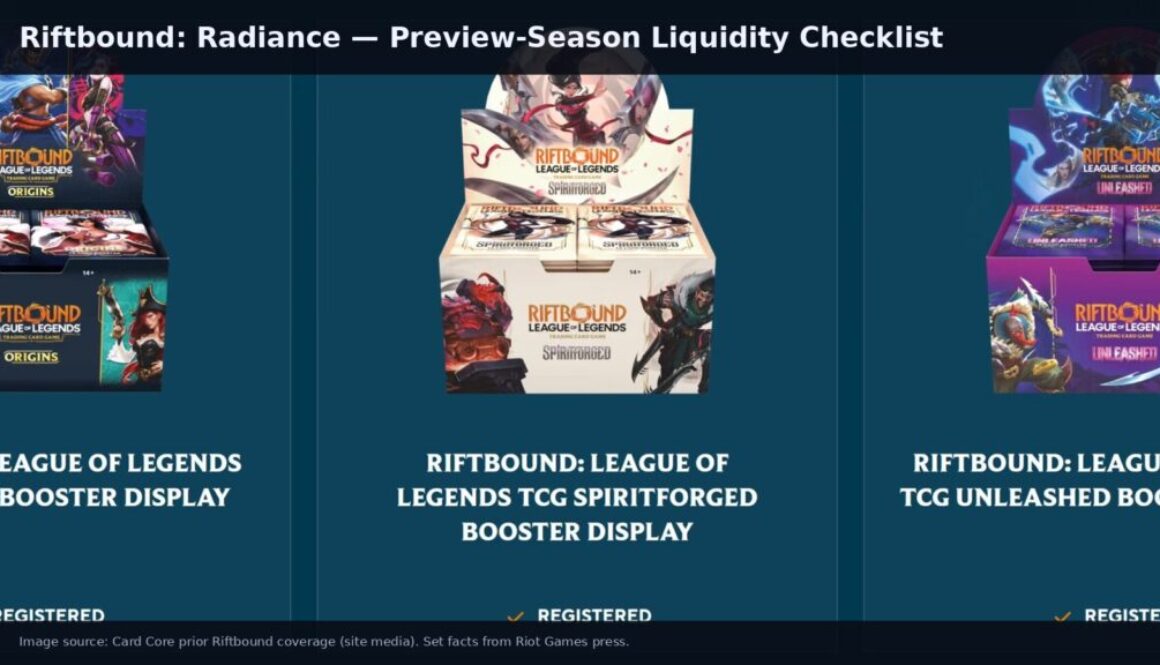
As the first official expansion for the League of Legends TCG, Spiritforged is more than just a new set—it’s the first major evolution of the competitive landscape, building upon the Origins foundation in every key way. Get ready to dive into the Ionian Spirit Blossom, where weapons are extensions of identity and a new gold rush for power has begun.
Here is your essential guide to what’s coming, when you’ll see it, and why this set will define the next era of Riftbound.
The Core of Spiritforged: More of Everything
While Riot Games has noted that Spiritforged is slightly smaller than the massive Origins debut, it is jam-packed with essential additions and brand-new mechanics designed to deepen the gameplay.
By the Numbers:
Total New Cards:221 cards, including Units, Gear, and Spells.
New Champion Legends:12 brand new playable Champion Legends are joining the fight. (Riot is keeping these under wraps for now—keep an eye on the PAX Preview Panel details for reveals!)
Overnumbered Cards: A whopping 40 Overnumbered cards are available, and this time they aren’t all Legends! Expect to chase special rarity versions of key gear and units.
Game-Defining New Mechanics
Spiritforged isn’t just power creep; it’s a strategic shift fueled by new resources and keywords.
Equipment: Weapons and armor are no longer just concepts; they are tangible Gear cards that let you enhance your units. This mechanic fundamentally changes how permanents function on the Battlefield.
Gold: A new Gear Token type that provides a fresh path to power. The introduction of a dedicated, spendable resource token suggests a powerful new layer of mid-game strategy and resource conversion.
New Keywords: Look out for new keywords like Equip (likely tied to the new Gear cards) and Repeat. “Repeat” sounds incredibly powerful and suggests maximizing card effect consistency—a mechanic that competitive players will immediately try to break.
When and Where to See the Reveals
The Preview Season is a rapid-fire event, giving the community a few weeks to analyze, speculate, and pre-order.
Event
Date
Status
Official Preview Season Starts
November 17, 2025
Underway!
Preview Season Ramps Up
November 21, 2025
Get ready for daily reveals!
Preview Season Concludes
December 3, 2025
Last call for spoilers.
China Release
December 2025
The meta goes live.
Global/English Release
February 2026
Time to play!
1. Influencer and Press Reveals (The Hype Train)
The best place to see new cards in action is through Riftbound’s press and influencer partners. These partners won’t just share a static image; they’ll show you how to play the card, integrating it into existing Origins decks or showcasing new synergies. Keep an eye on your favorite TCG content creators, as Riot hinted some might even be revealing alternate art versions of new cards!
2. The Official Card Gallery (The Complete Database)
Even with all the exciting external reveals, the official Riftbound Card Gallery remains your definitive source for the entire set.
Update Schedule: English cards will be added every Monday, Wednesday, and Friday at 5:00 PM PST until the set is fully revealed.
A Fun Fact for Completionists: Not every card gets an official “preview” on social channels. The Card Gallery will include every single card in the set, making it the only place to get a complete view. New additions will be tagged “new” to make tracking easy.
The Overnumbered Hunt: A Sneaky Collector’s Chase
The inclusion of 40 Overnumbered cards (including Legends, Champions, and Gear) is a major signal to the collector market. These ultra-rare cards, which have already commanded massive prices in Origins, will be highly sought after.
Riot has promised to be “sneaking these out to the community ahead of launch in some fun ways,” so make sure you are closely watching all official social channels for those surprise drops. Even with the split between CN and EN regions, Riot has committed to posting all Overnumbered reveals for everyone to enjoy once they’ve been shared by the appropriate team.
Spiritforged is set to dramatically shake up the metagame. Get ready to theorycraft, find those rare cards, and evolve your decks for the next era of competitive Riftbound!
For decades, the TCG industry has been a walled garden ruled by the “Big Three”: Magic: The Gathering, Pokémon, and Yu-Gi-Oh!. Challengers have come and gone—some surviving (One Piece), most fading into obscurity.
But on October 31, 2025, the walls didn’t just crack; they were breached.
Riftbound, Riot Games’ physical entrance into the trading card space, has officially launched globally. After analyzing the supply chain, the ludology, and the sheer ferocity of the secondary market, we are ready to make a bold claim: This is the most significant TCG launch since Pokémon debuted in the 90s.
It’s not just a game; it’s a market correction. Here is the Cardcore breakdown of why Riftbound is the new Titan at the table.
1. The “Esports Generation” Finally Gets Its TCG
Comparing a new game to Pokémon is usually hyperbole, but the numbers here demand it. Pokémon captured the hearts of children; Riftbound is weaponizing the 131 million monthly active users of League of Legends.
Unlike Disney Lorcana, which relies on passive fandom, Riftbound is converting active, competitive gamers into tabletop players. The IP moat here is massive. The launch strategy focuses on “Champion Identity”—allowing players to “main” Jinx or Lee Sin on paper just as they do on screen. This creates a psychological stickiness that generic “color allegiance” in Magic cannot match.
2. Fixing the “Mana Screw”: A Tier 1 Competitive Engine
Riot didn’t just slap pictures of Ahri on cardboard; they fixed the biggest complaints in TCG history.
No More “Non-Games”: Riftbound uses a separate “Side Deck” for energy. You draw two energy every turn. The days of losing because you didn’t draw a land (Magic) or Energy card (Pokémon) are over.
The Lane System: The game uses a spatial “Battlefield” system mimicking MOBA lanes. It feels tactical, like a board game, scaling perfectly from 1v1 to 4-player chaos.
Reviewers like Tolarian Community College are already praising the system for “unlearning bad habits” of older TCGs. It is a modern engine built for modern competitors.
3. The “Clairvoyant Market”: An Investor’s Dream
Here is where the money is. Riot launched Riftbound in China in August 2025, three months before the Global/English release. This staggered rollout has created a unique economic phenomenon we’re calling the “Clairvoyant Market.”
Because the Chinese meta was “solved” via the massive Shanghai National Open (1,966 players!) before the English cards even dropped, Western investors knew exactly what to buy.
The result? Immediate buyouts of meta-staples like Master Yi and Kai’Sa.
The Opportunity: This lag continues. The next set, Spiritforged, drops in China in Dec 2025 but globally in Feb 2026. Smart money will be watching the Chinese tournaments in January to buy out the English staples in February.
4. Secondary Market Velocity: The $1,200 Jinx
If you doubted the collector appeal, look at the prices. The “Signature” cards—featuring on-card signatures of the Champions—are trading at blue-chip levels immediately.
Jinx, Loose Cannon (Signature): ~$1,199.99
Ahri, Nine-Tailed Fox (Signature): ~$1,100.00
Sealed Booster Boxes: MSRP is ~$120, but street price is hitting $175+ due to scarcity.
Riot and their distribution partner UVS Games (UniVersus) have severely underestimated demand. Big box retailers (Walmart/Target) and Local Game Stores are wiped clean. While frustrating for players, this scarcity is driving the “fear of missing out” (FOMO) to fever pitches not seen since the 2020 TCG boom.
5. The Roadmap: Worlds 2027 is Confirmed
New TCGs often die because players fear the company will pull the plug. Riot has silenced that fear on Day 1. They have already confirmed the 2027 Riftbound World Championship.
Riot Games is an esports native. They aren’t figuring this out as they go; they are porting the infrastructure of the world’s biggest esport onto the tabletop. The first Regional Qualifiers in Houston (Dec 2025) sold out in minutes.
The Verdict
Riftbound is not a “flash in the pan.” It is a high-velocity, high-strategy product that has successfully successfully successfully successfully bifurcated its market into accessible “game pieces” for players and high-value “assets” for collectors.
The “Big Three” is officially the “Big Four.”
Cardcore Prediction: Expect high volatility through Q1 2026 as supply struggles to catch up to demand. If you can find product at MSRP, buy it. The Rift is open, and it’s not closing anytime soon.
Magic: The Gathering has teamed up with FINAL FANTASY™, and the result is nothing short of legendary. As part of the Summer Superdrop 2025, Wizards of the Coast is releasing three exclusive Secret Lair drops packed with stunning art, iconic references, and collector-worthy reprints. Whether you’re a diehard FF fan, a devoted Planeswalker, or both, this crossover delivers flavor, nostalgia, and bling in equal measure.
Let’s break down what you get, what it costs, and whether it’s worth the gil.
🎮 What Is Secret Lair x Final Fantasy?
These three drops are part of Magic’s Universes Beyond initiative, where the MTG multiverse merges with beloved franchises. This isn’t a new mechanic-heavy set—it’s a love letter to FINAL FANTASY fans with reimagined versions of existing Magic cards, showcasing characters, spells, and weapons from across the franchise’s 16 mainline titles.
🔥 The Three Drops
1. Game Over
Dramatic finishers get a Final Fantasy facelift.
Day of Judgment → Spira’s Punishment
Temporal Extortion → Absorb into Time
Toxic Deluge → Merciless Poisoning
Praetor’s Grasp → Unseat the Usurper
Star of Extinction → Meteorfall
💰 $29.99 non-foil / $39.99 rainbow foil
2. Grimoire
Powerful magic channeled by iconic FF heroes.
Prismatic Ending → Yuna’s Holy Magic
Cyclonic Rift → Hope’s Aero Magic
Damn → Noctis’s Death Magic
Lightning Bolt → Vivi’s Thunder Magic
Heroic Intervention → Aerith’s Curaga Magic
💰 $29.99 non-foil / $39.99 rainbow foil
3. Weapons
Legendary gear takes center stage.
Staff of the Storyteller → Yuna’s Sending Staff
Blade of Selves → Clive’s Invictus Blade
Umezawa’s Jitte → Cloud’s Buster Sword
Colossus Hammer → Gaia’s Dark Hammer
Sword of Truth and Justice → Tidus’s Brotherhood Sword
💰 $29.99 non-foil / $39.99 rainbow foil
💎 Exclusive Bundles (With Promo!)
For collectors who want it all—and a little extra:
English Bundle: All 3 drops in both non-foil and foil + Rainbow Foil Gilded Lotus Promo 🔖 $199.99
Japanese Bundle: Same as above, entirely in Japanese 🔖 $199.99
Superdrop Bundle: English + Japanese versions of everything 🔖 $399.99
These go on sale June 9, 2025 at 9 a.m. PT, exclusively on MagicSecretLair.com. Limited quantities. Expect them to sell out faster than you can say Zanarkand.
🧠 Is It Worth It?
If you’re in it for the:
🎨 Art? Absolutely. The treatments are stunning, and the weapon/effect pairings are fan service at its finest.
💵 Value? The reprints are powerful staples—Cyclonic Rift, Umezawa’s Jitte, and Lightning Bolt all have legacy play and collector value.
🕹️ Nostalgia? This hits hard. These are the cards you’ll want framed, sleeved, and maybe even graded.
But if you’re strictly a player on a budget, buying singles post-drop may be the smarter route.
Final Thoughts: Game Over or Game Changer?
This is more than just a Secret Lair—it’s a celebration of gaming’s two biggest fantasy franchises. Magic fans get iconic spells with new skin, and FF fans get a chance to immortalize their favorite characters in cardboard. Whether you grab a foil drop or just pick up Cloud’s Buster Sword as a single, there’s something here for every kind of fan.
Introduction: Defining Historical Significance in Magic: The Gathering
In the vast and intricate history of Magic: The Gathering, spanning over three decades, numerous sets have been released, each contributing to the game’s evolution in its own way. Determining the “top” sets from a historical standpoint requires a nuanced understanding of what constitutes significance beyond mere card power or popularity at the time of release. Historical significance in this context encompasses a set’s lasting impact on the game’s mechanics, its influence on design philosophy, its role in shaping competitive formats, its cultural resonance within the player community, and its introduction of enduringly iconic elements.1
Several criteria can be employed to evaluate a set’s historical importance. One key aspect is the introduction of groundbreaking mechanics or entirely new card types that fundamentally altered how the game is played.1 Another crucial factor is a set’s influence on competitive formats, either through the introduction of powerful cards that defined metagames or through the establishment of entirely new archetypes.2 Furthermore, a set’s impact on the game’s design philosophy, including changes to set structure, release strategies, or core design principles, contributes to its historical weight.1 Cultural relevance, encompassing a set’s thematic strength, its connection to memorable storylines, and its overall reception by the player community over time, also plays a significant role.4 Finally, the introduction of iconic cards or characters that have become synonymous with Magic: The Gathering and continue to hold significance across various formats solidifies a set’s place in history.3 It is important to acknowledge that any attempt to rank sets based on these criteria will inherently involve a degree of subjectivity, as different players will weigh these factors based on their own experiences and perspectives within the game.
The Genesis: Foundational Sets that Shaped the Game
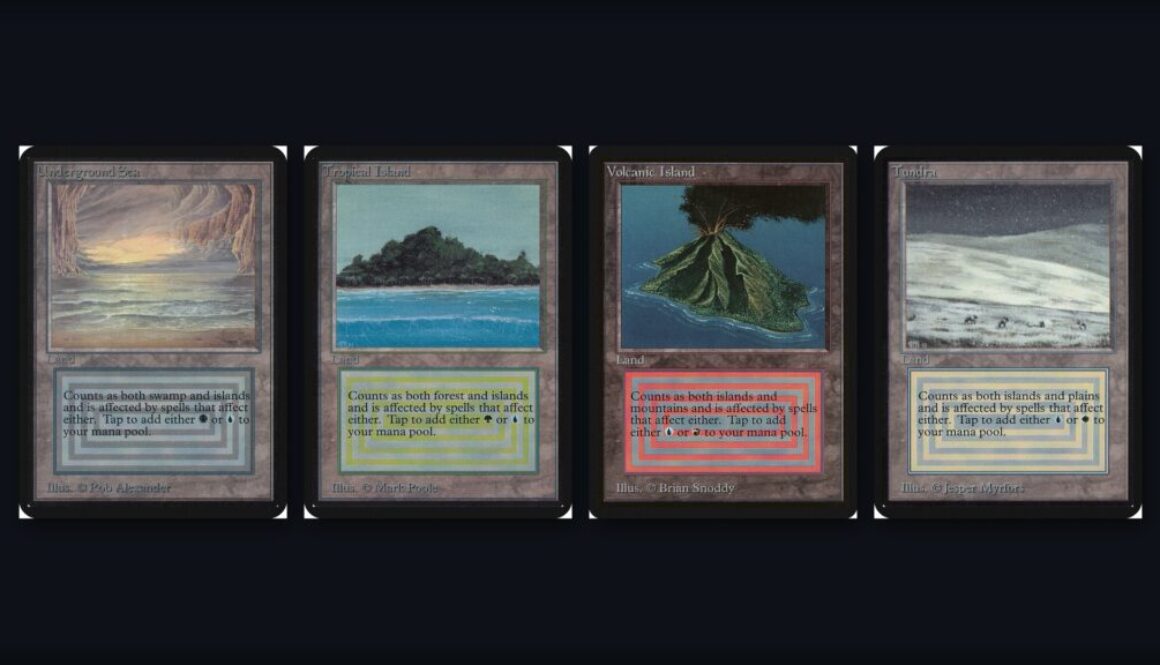
Alpha/Limited Edition (1993): The Blueprint of Magic Alpha, released in 1993, holds an unparalleled position in the history of Magic: The Gathering as the very first set, effectively laying the foundation for the entire game.3 This initial offering established the fundamental rules, the five colors of mana, the core card types (creature, spell, artifact, land, enchantment), and the very concept of a trading card game with customizable decks.3 Beyond these foundational elements, Alpha introduced some of the most powerful and iconic cards in the game’s history, including the legendary Power Nine – Black Lotus, Ancestral Recall, Time Walk, Mox Pearl, Mox Sapphire, Mox Jet, Mox Ruby, Mox Emerald – and the original dual lands, such as Tropical Island and Underground Sea.3 These cards, renowned for their immense power and format-defining capabilities, continue to shape high-level competitive play in formats like Vintage.3 The impact of Alpha extends beyond just powerful individual cards. It set the initial standards for card effects, establishing precedents for what players could expect from various types of spells and abilities.3 The very structure of the game, from mana costs to card interactions, was first codified in this set.7 Considering that Alpha was the first attempt at creating a game of this nature, its comprehensive design and the breadth of ideas it tackled are remarkably impressive.1 The set’s contribution to gaming history as a whole, through the invention of the collectible card game genre, ensures its eternal significance.7 Its foundational nature is so profound that all subsequent sets are, in essence, built upon the framework it established.
Arabian Nights (1993): The First Expansion and Thematic Identity Released shortly after Alpha in 1993, Arabian Nights holds the distinction of being the very first expansion set for Magic: The Gathering.3 This marked a pivotal moment in the game’s history, signaling its intent to grow and evolve beyond the initial release.3 Arabian Nights was groundbreaking not only for being the first expansion but also for introducing the concept of flavor themes to Magic.3 Heavily inspired by the tales from “One Thousand and One Nights,” the set brought a distinct Arabian aesthetic and narrative to its cards, enriching the game’s world and demonstrating the potential for thematic depth in future expansions.3 This thematic approach became a crucial aspect of Magic set design, allowing for immersive and flavorful gameplay experiences that would resonate with players.8 Beyond its thematic contributions, Arabian Nights also introduced several powerful and highly sought-after cards that had a significant impact on early Magic.3 Cards like Bazaar of Baghdad and Library of Alexandria, both incredibly potent lands offering unique card advantage, became staples in competitive play and remain highly valuable collector’s items today.3 Even in formats like Pauper, the set’s inclusion of the removal spell Oubliette had a notable effect.3 As the first step in Magic’s expansion, Arabian Nights established a precedent for continuous growth and demonstrated the power of thematic design, solidifying its place as a historically significant set.
The Explosive Growth: Sets That Redefined Power and Mechanics
Version 1.0.0
Urza’s Saga (1998): The Era of Unparalleled Power Urza’s Saga, released in 1998, is often remembered as a period of unparalleled power in Magic: The Gathering, leading to an era colloquially known as “Combo Winter”.3 This set pushed the boundaries of card strength to such an extent that it caused significant upheaval in the competitive landscape, with fast and powerful combo decks dominating tournaments.9 The sheer density of overpowered cards in Urza’s Saga prompted numerous bans in the Standard format and other formats, a testament to its profound impact on the game’s balance.3 The design team reportedly learned significant lessons from this era regarding the potential consequences of unchecked card power.3 Urza’s Saga introduced a plethora of iconic and incredibly potent cards, many of which continue to see play in various formats despite the bans.3 Lands like Tolarian Academy, which could tap for mana equal to the number of artifacts controlled, and Gaea’s Cradle, which provided green mana based on the number of creatures, enabled explosive and game-ending turns.3 Spells like Yawgmoth’s Will, allowing players to replay any number of cards from their graveyard in a turn, further contributed to the combo-centric environment.3 The impact of Urza’s Saga was so severe that it even threatened the stability of Magic as a game, prompting subsequent sets to be designed with a significantly lower power level.9 Even though many of its strongest cards are now banned, the set’s influence on card design can still be felt in modern sets, marking it as a historically significant, albeit cautionary, tale in Magic’s development.
Mirrodin (2003): The Artifact Revolution Released in 2003, Mirrodin stands as a landmark set in Magic: The Gathering history due to its intense focus on artifacts and the introduction of the notoriously powerful Affinity mechanic.3 Set on an artifact-themed plane of the same name, Mirrodin brought a vast array of potent artifact cards into the game, fundamentally shifting the landscape of Standard and leaving a lasting impact on eternal formats.3 The sheer power of the artifact-based strategies enabled by Mirrodin led to a significant overhaul of the Standard format at the time, necessitating a considerable number of bans to restore balance.3 The Affinity mechanic, which reduced the cost of spells based on the number of artifacts a player controlled, proved to be exceptionally strong, enabling incredibly fast and aggressive strategies.3 Mirrodin also introduced a wealth of individual cards that have become staples in various formats.3 Cards like Skullclamp, a deceptively powerful equipment that provides immense card advantage, Chrom Mox, a zero-mana artifact that can accelerate mana production, and Chalice of the Void, a powerful control tool against low-cost spells, continue to see widespread play in Modern, Legacy, and even Vintage.3 Mirrodin’s profound emphasis on a single card type and the subsequent dominance it exerted over the game serve as a significant case study in set design and balance, cementing its historical importance.
The Modern Era: Sets That Shaped Contemporary Magic
Version 1.0.0
Ravnica: City of Guilds (2005): The Dawn of Factions and Multicolor Focus Ravnica: City of Guilds, released in 2005, is widely regarded as a pivotal set that ushered in a new era for Magic: The Gathering, particularly in its approach to multicolor gameplay and faction-based design.2 This set was the first to fully embrace and solidify the concept of two-color guilds, with each of the ten possible color combinations represented by a distinct guild boasting its own unique identity, mechanics, and flavor.2 Before Ravnica, while multicolored cards existed, they were not organized into such cohesive and well-defined factions.2 The set’s dedication to these guilds provided players with clear allegiances and playstyles to identify with, significantly influencing deckbuilding strategies.2 Ravnica also introduced the highly influential “shock lands,” a cycle of nonbasic lands with basic land types that could enter the battlefield untapped by paying two life.2 These dual lands provided unparalleled mana fixing for multicolor decks and quickly became staples across various formats, including Standard, Modern, and Legacy.2 Many players and designers consider Ravnica a watershed moment in Magic’s design history, demonstrating the potential of focusing on strong thematic and mechanical connections between color combinations.2 The success of Ravnica’s guild system has had a lasting impact, influencing the design of numerous subsequent sets that have explored faction-based mechanics.2 Its profound influence on multicolor gameplay and its establishment of a beloved and revisited setting solidify its place as one of the most historically significant sets in Magic’s history.2
Zendikar (2009): Lands Matter and Adventure World
Released in 2009, Zendikar made a significant mark on Magic: The Gathering through its innovative “lands matter” theme, its introduction of highly influential fetch lands, and the return of popular full art basic lands.2 The set heavily emphasized the role of lands in gameplay, with numerous cards and mechanics interacting with or being powered by lands in unique ways.2 One of its most enduring contributions was the introduction of a new cycle of fetch lands – Arid Mesa, Scalding Tarn, Verdant Catacombs, Marsh Flats, and Misty Rainforest – which allowed players to search their library for specific basic land types, dramatically improving mana consistency in multicolor decks, particularly in eternal formats like Modern and Legacy.2 These lands have become format staples and remain highly sought after.2 Zendikar also marked the popular return of full art basic lands to regular booster packs.2 These visually striking lands, featuring panoramic artwork, were immensely popular with players and collectors and have become a recurring feature in subsequent sets.2 Furthermore, Zendikar introduced the initial concept of the Eldrazi, ancient and immensely powerful beings that would later become major antagonists in the game’s lore.2 While their initial appearance was more subtle, the Eldrazi’s introduction in Zendikar laid the groundwork for significant storylines in later sets.2 The set’s focus on lands, its introduction of format-defining fetch lands, and the aesthetic appeal of full art basics, along with the nascent introduction of the Eldrazi, all contribute to Zendikar’s historical significance.
Lorwyn (2007): The Arrival of Planeswalkers Lorwyn, released in 2007, holds a truly unique and transformative place in Magic: The Gathering history as the set that introduced the planeswalker card type.2 This groundbreaking addition was the first entirely new card type since the game’s inception and fundamentally altered the landscape of Magic.2 Planeswalkers, representing powerful mages from across the Multiverse, added a persistent and powerful element to gameplay, acting as both threats and sources of card advantage.2 Their introduction opened up vast new design space and influenced deckbuilding strategies across all formats, from Standard to Commander.2 The arrival of planeswalkers in Lorwyn marked a significant shift in the game’s narrative as well, providing players with tangible representations of the iconic characters who drove the storylines.2 These characters, such as Jace Beleren, Liliana Vess, and Chandra Nalaar, quickly became fan favorites and have remained central figures in Magic’s lore ever since.2 The impact of planeswalkers on the game is undeniable; they have become a cornerstone of Magic’s identity and a key element in set design and storytelling.2 As the set that brought this revolutionary card type into existence, Lorwyn’s historical significance is immense and its influence continues to shape the game today.2
Innistrad (2011): The Reign of Thematic Excellence
Innistrad, released in 2011, is celebrated for its exceptionally strong gothic horror theme and its masterful integration of flavor into every aspect of the set, from card design to mechanics.1 Drawing inspiration from classic monster archetypes like werewolves, vampires, zombies, and ghosts, Innistrad created a deeply immersive and atmospheric experience for players.1 The set’s thematic strength was so pronounced that it is often credited with kickstarting the “World of Hats” era of plane design, where new settings are easily summarized by a single, strong concept.1 Innistrad also introduced the innovative double-faced transforming cards, a mechanic that perfectly captured the duality and transformation inherent in many horror tropes, such as werewolves changing between their human and wolf forms.1 These cards added a unique layer of complexity and strategic depth to the game.4 Furthermore, Innistrad contributed several powerful and enduring cards to the game, including format staples like Snapcaster Mage and Liliana of the Veil, which continue to see play in various formats.1 The set is also fondly remembered for its strong Limited format, often cited as one of the best of all time.1 Innistrad’s success in blending compelling themes with innovative mechanics and powerful cards solidified its place as a historically significant and beloved set in Magic’s history.
Khans of Tarkir (2014): The Wedge Revolution and Delve’s Lesson Khans of Tarkir, released in 2014, made a significant impact on Magic: The Gathering by centering its design around three-color “wedge” combinations – allied colors paired with their enemy color – a relatively unexplored design space at the time.2 The set introduced five distinct clans, each embodying a different wedge color combination and possessing its own unique identity, mechanics, and playstyle.4 This focus on three-color strategies created a wealth of new deckbuilding possibilities and led to interesting card interactions.4 Khans of Tarkir also introduced the Delve mechanic, which allowed players to exile cards from their graveyard to help pay for spells.4 While Delve proved to be a popular and powerful mechanic, the set also provided a “hard lesson” about its potential to be overpowered, as some Delve cards went on to become problematic in various formats.4 Despite this, Khans of Tarkir is widely praised for its highly enjoyable draft format and its distinctive setting, which resonated strongly with many players.4 The set’s exploration of three-color combinations and its introduction of the Delve mechanic, along with its memorable setting and gameplay, contribute to its historical significance in Magic’s evolution.4
Honorable Mentions: Other Influential Sets
Several other Magic: The Gathering sets have left a significant mark on the game’s history and deserve recognition:
Mirage (1996): This set holds the distinction of being the first ever designed with Limited play (drafting and sealed) in mind, marking a fundamental shift in how Magic sets were conceived.1 It also introduced the block structure for set releases, where three thematically linked expansions are released sequentially.8
Invasion (2000): While multicolored cards existed before, Invasion was the first set to truly normalize and focus on them as a central theme.2 It also introduced the popular and versatile Kicker mechanic, which allows spells to have additional effects for an extra cost.2
Worldwake (2010): This set, the second in the original Zendikar block, introduced several incredibly powerful and format-defining cards, most notably the planeswalker Jace, the Mind Sculptor, and the creature Stoneforge Mystic.3 These cards had a profound and lasting impact on competitive formats.
Time Spiral (2006): This set served as a nostalgic callback to many previous eras of Magic, featuring numerous reprints and references to older cards and mechanics.2 Its complexity and density of mechanics ultimately led to the development of the “New World Order” design philosophy, which aimed to reduce complexity at lower rarities in subsequent sets.2
Dominaria (2018): This set marked a significant turning point in Magic’s release strategy by doing away with the traditional block structure and becoming a large, standalone set.1 It also represented a nostalgic return to the game’s original and most iconic setting, Dominaria.4
Conclusion: The Enduring Legacy of MTG’s Most Historic Sets
Magic: The Gathering’s long and storied history is punctuated by sets that have not only provided new cards and experiences but have also fundamentally shaped the game we know today. The sets highlighted in this report – Alpha, Arabian Nights, Urza’s Saga, Mirrodin, Ravnica: City of Guilds, Zendikar, Lorwyn, Innistrad, Khans of Tarkir, and Time Spiral – each represent a significant moment in the game’s evolution, whether through the establishment of core principles, the introduction of revolutionary mechanics or card types, or the profound influence on design and competitive play.
These sets, while diverse in their themes and mechanics, share a common thread of leaving a lasting legacy on Magic. Alpha laid the very foundation, while Arabian Nights demonstrated the power of thematic design. Urza’s Saga and Mirrodin stand as testaments to the impact of unchecked power and focused themes. Ravnica redefined multicolor gameplay and faction identity, while Zendikar revolutionized mana bases and hinted at cosmic horrors. Lorwyn ushered in the era of planeswalkers, and Innistrad set a new standard for thematic excellence. Khans of Tarkir expanded the horizons of multicolor strategies, and Time Spiral served as a reflective bridge to the game’s past while influencing its future.
It is important to remember that Magic: The Gathering is a constantly evolving game, and future sets will undoubtedly contribute their own chapters to this rich history. The historical significance of a set is often best understood within the context of its release and the specific impact it had on the game at that time. However, the sets discussed in this report have consistently demonstrated their enduring legacy, continuing to influence gameplay, design, and the collective memory of the Magic: The Gathering community. Their contributions have been instrumental in making Magic the iconic and enduring game it is today.
Table 1: Top 10 Most Historically Significant MTG Sets
Rank
Set Name
Release Year
Key Reasons for Significance
1
Alpha/Limited Edition
1993
The very first Magic set, establishing the game’s rules, card types, and color pie. Introduced the Power Nine and original dual lands.
2
Arabian Nights
1993
The first expansion set, pioneering the use of flavor themes in Magic. Introduced powerful early cards like Bazaar of Baghdad and Library of Alexandria.
3
Urza’s Saga
1998
Known for its exceptionally high power level, leading to “Combo Winter” and numerous bans. Introduced iconic lands like Tolarian Academy and Gaea’s Cradle, and powerful spells like Yawgmoth’s Will.
4
Mirrodin
2003
Introduced a strong artifact theme and the powerful Affinity mechanic, leading to a significant overhaul of Standard and leaving a lasting impact on modern formats with cards like Skullclamp and Chrom Mox.
5
Ravnica: City of Guilds
2005
Introduced the iconic guild system and a heavy focus on two-color combinations. The introduction of shock lands revolutionized mana fixing in multicolor decks across various formats.
6
Lorwyn
2007
Historically significant as the first set to introduce planeswalker cards, a new card type that fundamentally changed the game and its narrative.
7
Zendikar
2009
Introduced the highly influential fetch land cycle, which significantly improved mana consistency in eternal formats. Also marked the popular return of full art basic lands and the initial appearance of the Eldrazi.
8
Innistrad
2011
Celebrated for its incredibly strong gothic horror theme and its masterful integration of flavor. Introduced innovative double-faced transforming cards and powerful, enduring cards like Snapcaster Mage and Liliana of the Veil.
9
Khans of Tarkir
2014
Centered around three-color “wedge” combinations, introducing unique clan identities. Introduced the Delve mechanic and provided valuable lessons about its balancing. Also known for its popular draft format and distinctive setting.
10
Time Spiral
2006
Served as a nostalgic callback to Magic’s history, featuring numerous reprints and references. Its complexity influenced the development of the “New World Order” design philosophy, aiming for simpler common cards in future sets.
Table 2: Introduction of Key Mechanics by Set
Set Name
Release Year
Key Mechanics Introduced
Alpha/Limited Edition
1993
Mana System, Color Pie (implicitly)
Arabian Nights
1993
Flavor Themes
Urza’s Saga
1998
Cycling (via precursor ‘sliding’) 11
Mirrodin
2003
Affinity, Equipment
Ravnica: City of Guilds
2005
Guilds, Shock Lands
Lorwyn
2007
Planeswalkers
Zendikar
2009
Fetch Lands
Innistrad
2011
Double-Faced Cards, Flashback
Khans of Tarkir
2014
Delve
Time Spiral
2006
Suspend, Flashback (returning), Morph (returning), many other returning mechanics showcasing Magic’s history