PSA Crossover Pricing: The $599 Miss Math
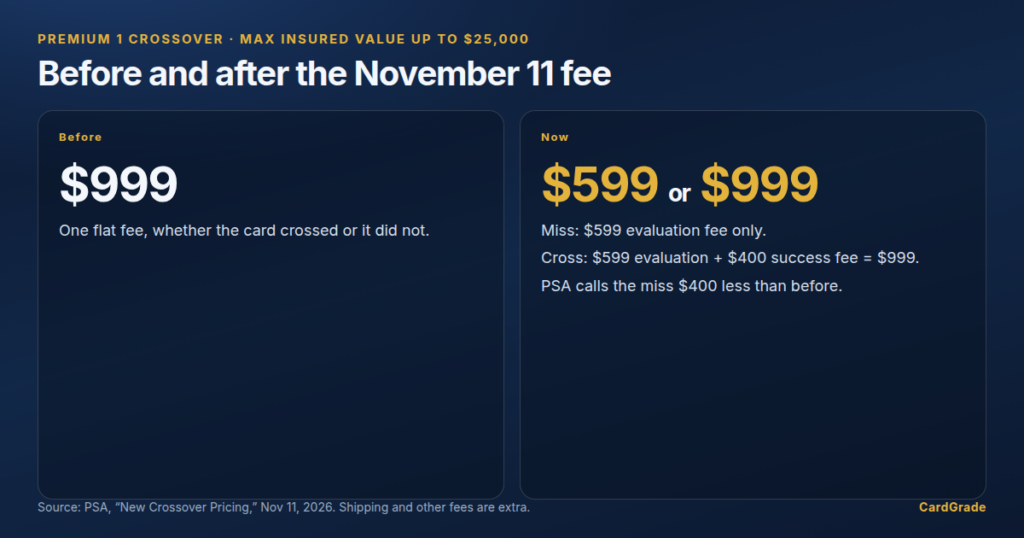
PSA crossover pricing changed on November 11, 2026. At PSA’s five Premium service levels, the tiers built for cards worth more than $10,000, a crossover that fails now costs a flat $599 evaluation fee instead of the full grading fee. A card that does cross still pays the same total as before: $999 at Premium 1. So PSA cut the price of a miss, not the price of a hit. The useful question is the odds. At Premium 1, a card you would net $2,500 more on in a PSA holder now needs about a 28.5% chance of crossing to be worth sending, down from 40% under the old flat fee.
Below: exactly what changed, what didn’t, the break-even math, and how to set a minimum grade so a “successful” crossover doesn’t cost you money. Fee figures come from PSA’s November 11 announcement and its Crossover service page.
What PSA changed on November 11
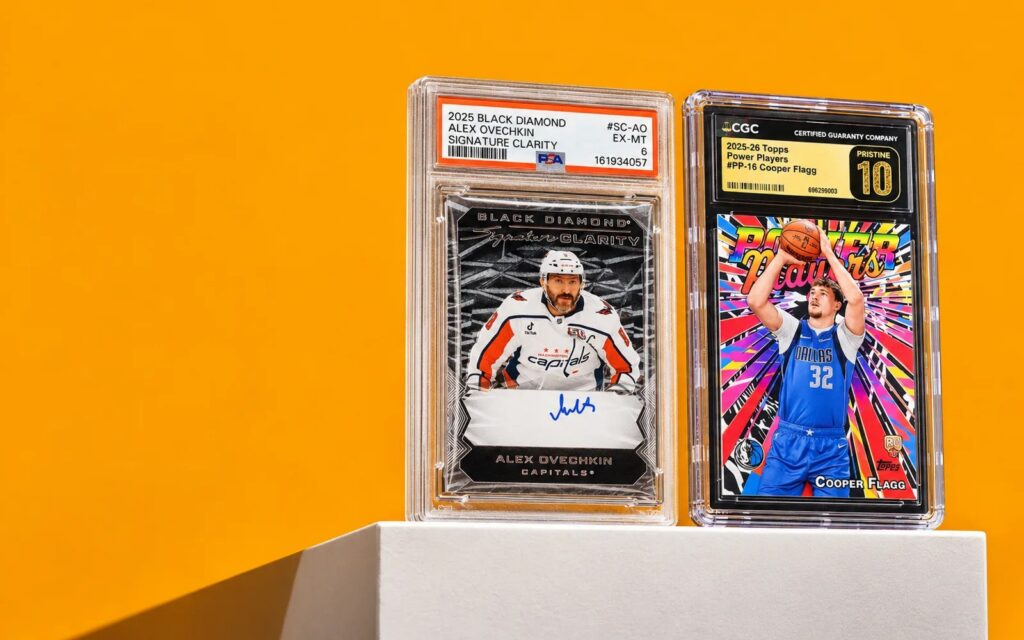
A crossover is a card already graded by another company that you send to PSA in its current holder. You pick a minimum PSA grade. If PSA’s graders meet it, the card is cracked out and sealed in a PSA slab; if not, it comes back in its original holder. Before November 11, you paid the full service fee either way. New Premium crossover orders are now billed in two parts: a $599 evaluation fee charged whatever the outcome, plus a successful crossover fee charged only if the card makes your minimum.
| PSA level | Max insured value | If it misses | If it crosses |
|---|---|---|---|
| Premium 1 | $25,000 | $599 | $599 + $400 = $999 |
| Premium 2 | $50,000 | $599 | $599 + $1,400 = $1,999 |
| Premium 3 | $100,000 | $599 | $599 + $2,400 = $2,999 |
| Premium 5 | $250,000 | $599 | $599 + $4,400 = $4,999 |
| Premium 10 | $250,001 and up | $599 | $599 + $9,400 = $9,999 and up |
PSA only spelled out the before-and-after for Premium 1, where a miss used to cost $999 and now costs $599. Nothing is paid up front: PSA charges the card on file after grading, based on the outcome, plus shipping and other fees. The Crossover page also lists a second, higher set of success fees (+$700 to +$12,400), so confirm which line matches your submission type before you build an order.
What didn’t change
- Most crossovers. Express ($199, up to $2,500), Super Express ($349, up to $5,000) and Premier ($599, up to $10,000) keep their existing pricing: you pay the full fee whether the card crosses or not. As Cardboard Journal noted, that still covers most crossover submissions.
- The cost of success. A card that crosses pays the same total it always did at Premium 1. If your card crosses, you saved nothing.
- No timeline for the rest. PSA says it plans to bring the split to more service levels later. It gave no date.
One quiet result: $599 is now the price of a failed attempt at every level from Premier up. For a card under $10,000, a Premier crossover costs $599 hit or miss, exactly what it cost before.
PSA crossover pricing: the break-even math
A crossover is a bet. You pay to find out whether the card is worth more in a PSA slab. Two numbers decide it:
- The extra you’d net in a PSA holder: what the card would sell for in a PSA slab at the grade you require, minus what it sells for in its current holder, both after your selling fees. Use dated sales of the same card, same grade, from each grader. Asking prices don’t count.
- Your honest chance of crossing: PSA doesn’t publish crossover success rates, so this is your own judgment of the card’s corners, edges, surface and centering against PSA’s standard.
At Premium 1, the attempt pays off on average when your chance of crossing is above $599 ÷ (extra net − $400). Under the old flat fee it was $999 ÷ extra net. With an illustrative $2,500 gap: 599 ÷ 2,100 = 28.5% now, versus 999 ÷ 2,500 = 40.0% before. With a $5,000 gap, the bar drops from 20.0% to 13.0%.
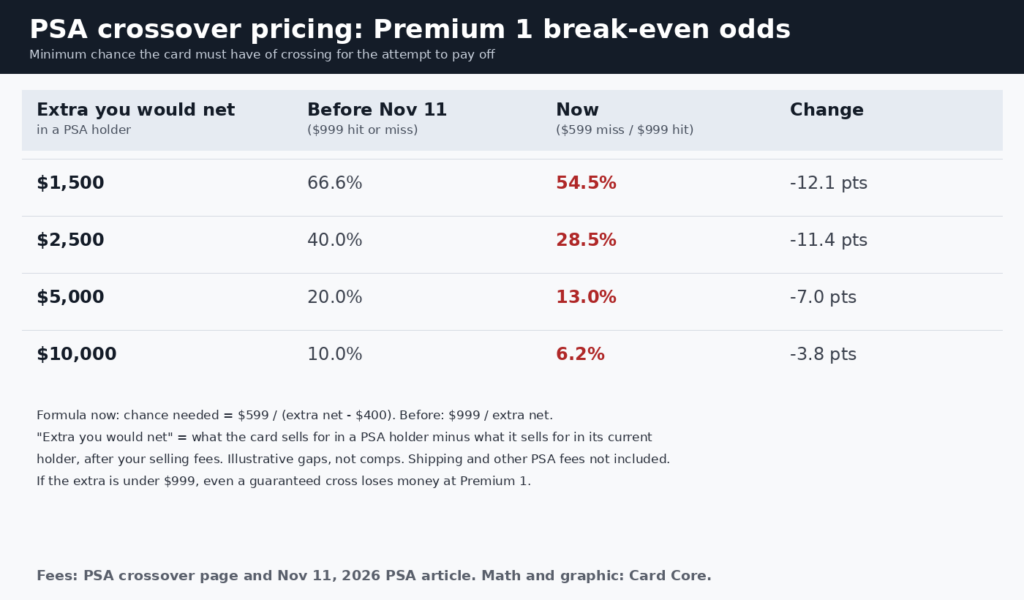
Two things fall out of the math. First, the change helps most on thin gaps and long shots; when the PSA premium is large, the old fee was already easy to justify. Second, if the extra you’d net is under $999, a Premium 1 crossover loses money even when it works. A cheaper miss doesn’t fix a gap that small. That’s the same net-of-fees discipline as our card grading break-even example, applied to a card that’s already in a slab.
Check that a PSA premium actually exists
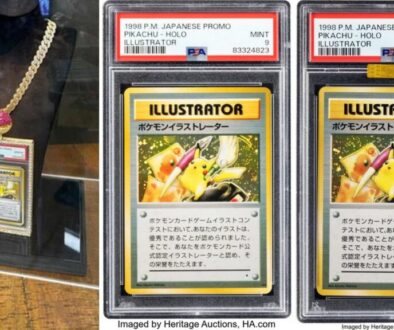
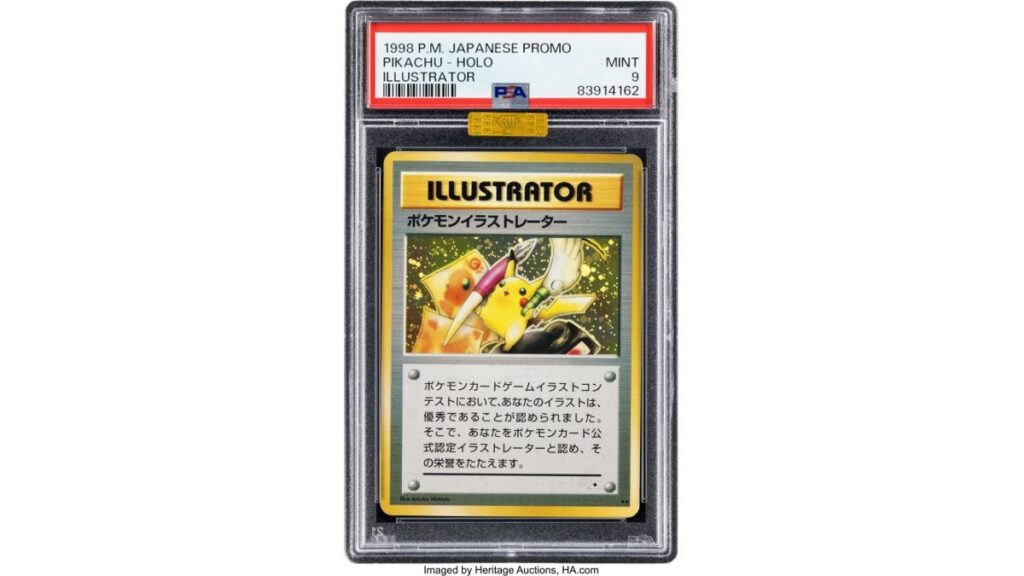
The whole bet rests on the label gap, and it’s easy to overstate it. The cleanest recent example is also a warning. On September 18–19, 2026, a PSA 9 Pikachu Illustrator sold for $5,000,000 at Heritage (Collectibles News). On September 19, a CGC 9 copy sold for $2,806,271 at Goldin (Pallet.Club). The Pack Report read that as a 78% PSA premium. But the PSA copy carried an MBA Gold Diamond sticker, and Pokeforecast cautioned that two lots can’t give a clean PSA-versus-CGC read.
The lesson scales down to a $15,000 card: pull same-grade, same-card sales from each grader, drop stickered or otherwise special copies, and use the median of what actually sold. Our Pikachu Illustrator liquidity breakdown walks through that sorting on the most expensive example in the hobby. If the gap is a handful of sales or a single outlier, your “extra net” is a guess.
Set the minimum grade where the money is
PSA defines the minimum grade as the lowest PSA grade you’ll accept, and says choosing one has no effect on the grade your card gets. Under the new pricing it matters more, because it decides which outcome triggers the success fee. Set it at the lowest PSA grade whose sales beat your current slab by more than the full successful-crossover cost. Set it too low and you can pay $999 to move a CGC 9 into a PSA 8 that sells for less. Set it too high and you mostly buy $599 misses.
Who should send a crossover now
- Worth a look: cards worth more than $10,000 in a CGC, BGS or SGC slab where same-grade PSA sales clearly beat the current holder by more than the success-case fee, and the card looks strong for its grade. Those coin-flip cards were hard to justify at $999 a miss.
- Nothing changed: cards under $10,000. Express, Super Express and Premier still charge the full fee, so run the old math: chance of crossing times extra net has to beat the whole fee.
- Skip it: cards where the PSA premium rests on one or two sales, stickered outliers, or asking prices, and any card where a successful cross wouldn’t clear its own fee.
Timing is on your side at this level. PSA’s Crossover page lists 5–7 business days for Premium 1 through Premium 5, while its backlog tracker put the overall queue at 6.1 million units on November 17, down 700,000 since November 3. For how the grader market got here, see our card grading consolidation watch list.
Bottom line
PSA crossover pricing now makes a failed Premium attempt cost $599 instead of the full fee, and leaves the cost of success alone. That lowers the odds a high-value crossover needs to make sense, but it doesn’t create a PSA premium that isn’t there. Price the gap from completed same-grade sales, set the minimum grade where a cross actually pays, and walk away from cards whose upside is under $999. For more net-outcome playbooks, browse our Collector Guides and the latest grading and platform changes in Market News.