MTG God Packs: What 2027 Booster Changes Mean
MTG God Packs are coming back. On October 5, 2026, Wizards of the Coast announced a booster overhaul that starts with Nauctis: The Sunken Realm, the first Magic set of 2027, due February 5, 2027. Roughly 1 in every 1,000 Booster Packs and 1 in every 300 Collector Boosters will be a God Pack stuffed with rares and mythics. The same announcement removes foil commons and uncommons from Booster Packs and takes three cards out of every Collector Booster. The God Pack gets the headlines. The rest of the changes are what will actually show up in most of the packs you open.
This is a structure story, not a price call. Below: what changes, what the odds mean for a real buyer, and how to adjust before Nauctis preorders open. No comps, no print runs, nothing Wizards hasn’t published. For more pieces like this, see Market News, the Collector Guides hub, and our Magic: The Gathering coverage.
What Wizards changed for 2027 boosters
Here is the full list, from the official announcement and the matching WPN note to retailers:
- Play Boosters are renamed Booster Packs. WPN calls this “a name change, not a new product.” They are still the packs used for Prerelease, Draft, and Sealed.
- God Packs show up in every Magic Multiverse set starting with Nauctis. Universes Beyond sets are expected to get them in 2028.
- Booster Packs drop foil commons and uncommons, and a foil is no longer guaranteed in every pack. Any foil you do open in a Booster Pack will be a rare or mythic rare.
- Foil rare and mythic rates go up in Booster Packs, and traditional-foil Japan Showcase cards can now appear in the Booster Pack wildcard slot. Until now they were Collector Booster–only.
- Collector Boosters lose two foil commons and one foil uncommon. Those three cards are not replaced.
- No MSRP change. Wizards wrote that “none of these changes come with any adjustments to prices.”
Wizards explains the trade directly. Pulling the low-interest foils frees up printing capacity for God Packs and for Japan Showcase cards in Booster Packs. Magic communications director Blake Rasmussen gave Polygon a similar explanation: removing those cards “reduces our overall printing complexity to a noticeable degree.”
What’s inside MTG God Packs
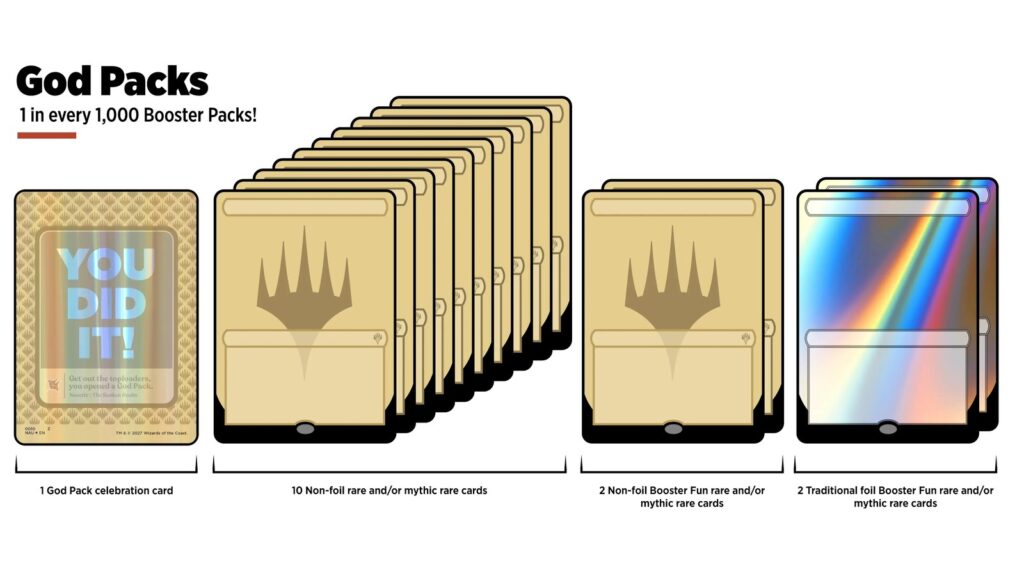
From the outside, a God Pack looks like any other pack. WPN says it is “not a separate product to order.” It is mixed in at random with the Booster Packs and Collector Boosters a store already stocks. In a Booster Pack, about 1 in 1,000 will contain:
- 1 “You did it!” God Pack celebration card
- 10 non-foil rare and/or mythic rare cards
- 2 non-foil Booster Fun rare and/or mythic rare cards
- 2 traditional foil Booster Fun rare and/or mythic rare cards
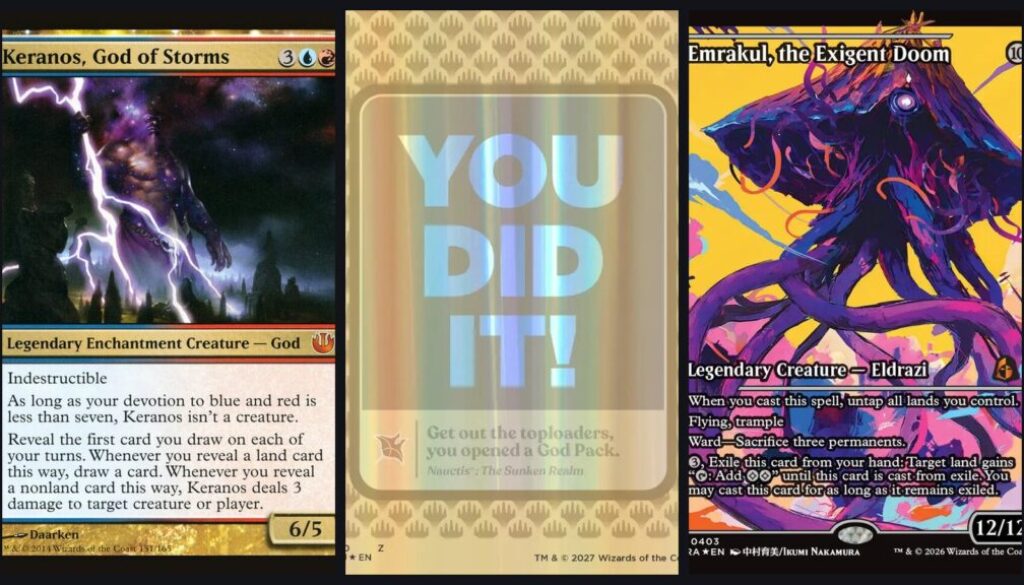
That makes 14 rares or mythics and a keepsake card, with no commons or uncommons. Polygon reports Rasmussen’s description of the celebration card as both a reference card and something to display. On the sample shown by Wizards, it reads “Get out the toploaders, you opened a God Pack.”
Collector Booster God Packs, and the three missing cards
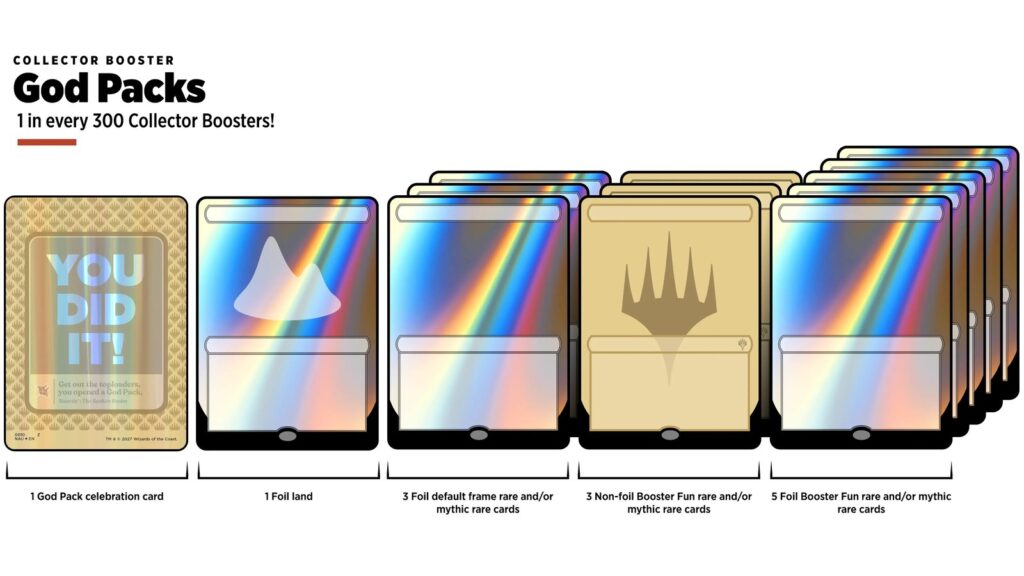
Collector Boosters get better God Pack odds, about 1 in 300, and a more premium layout: a celebration card, one foil land, three foil default-frame rares or mythics, three non-foil Booster Fun rares or mythics, and five foil Booster Fun rares or mythics. Wizards says that last group, the “foil fancy slot” five times over, could in theory hold more than one headliner card, but calls that “pretty improbable.”
The bigger change for anyone who buys Collector Boosters regularly is the other one. Starting with Nauctis, every regular Collector Booster has three fewer cards: two foil commons and one foil uncommon, not replaced. GameSpot reports that this takes the pack from 15 cards to 12. Wizards is open about it: “How does removing cards make opening Collector Boosters more exciting? We’ll be honest here—it doesn’t.” The stated reason is that most openers skip those cards anyway.
For collectors, the useful takeaway is this: same MSRP, fewer cards, and value even more concentrated at the top of the pack. If you already think about Collector Boosters as a few slots that matter plus filler, that’s now closer to literally true. If you liked those foil commons for a cube, a Pauper deck, or a foil set, there are fewer of them per pack, and from Nauctis on, Collector Boosters are the only booster that still has them.
God Packs aren’t new: the Journey into Nyx precedent
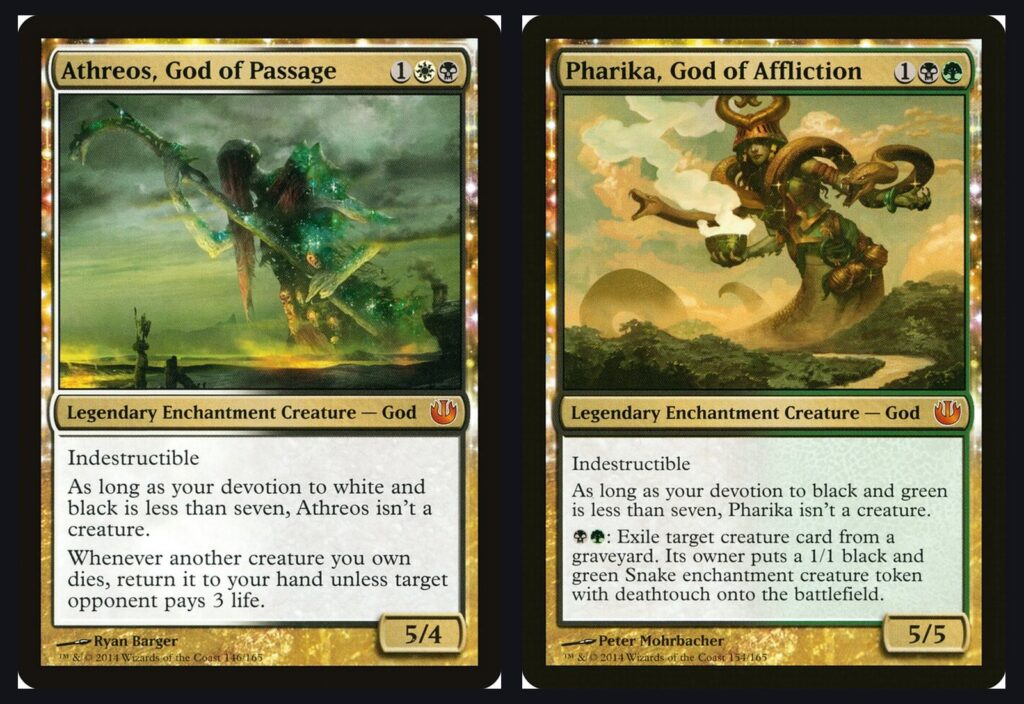
Magic has done this before. As Polygon recounts, Journey into Nyx boosters in 2014 had a very slim chance of being a pack made entirely of Theros-block gods. Back then it was a one-time surprise. In 2027 it becomes a standing feature of every Magic Multiverse set, with published contents and published odds. Rasmussen told Polygon that bringing God Packs back as a regular feature “has long been at the top of our list of wants.”
That difference matters for collectors. A one-off God Pack was a story. A recurring God Pack with known odds is a probability you can reason about. In practice, it’s a lottery ticket attached to every pack, and lottery tickets are easy to overpay for.
Japan Showcase cards and better foil odds in Booster Packs
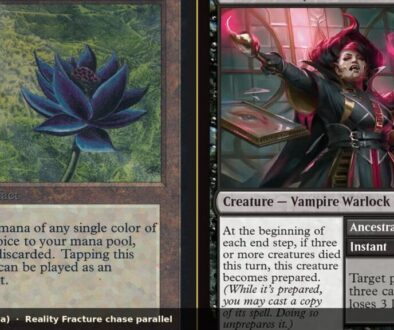
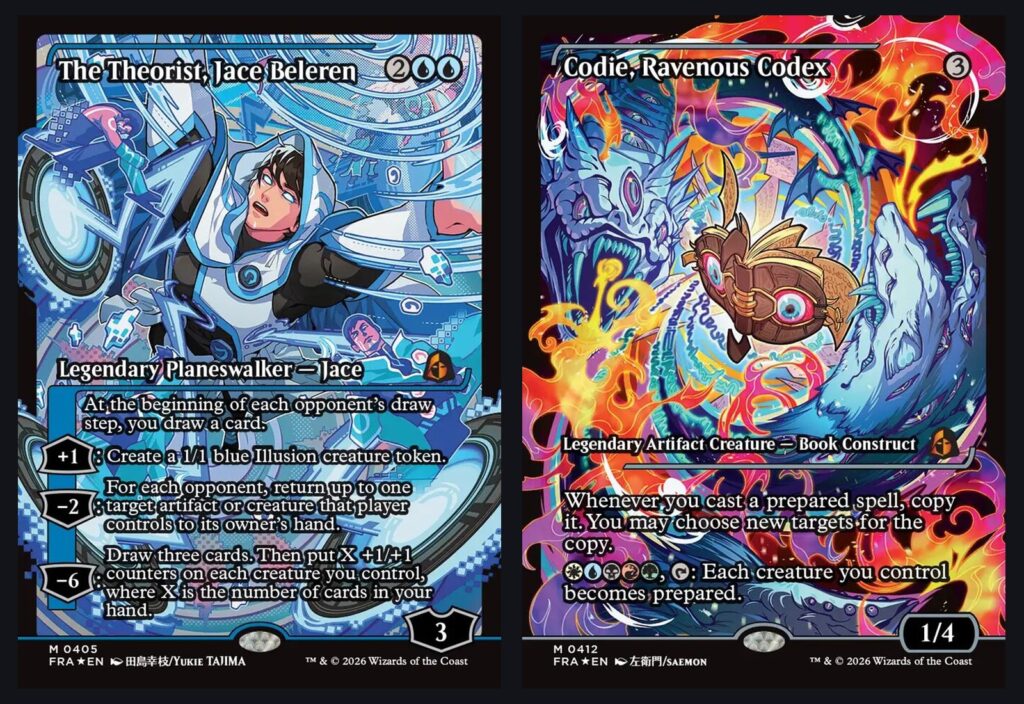
The change that affects the most packs is the least flashy one. With foil commons and uncommons gone from Booster Packs, the foils that remain are all rares and mythics. Rasmussen told Polygon that the chance of a foil rare or mythic in a Booster Pack rises from roughly 7% to 10%. Traditional-foil Japan Showcase cards, which recent sets limited to Collector Boosters (Reality Fracture’s run includes cards like Emrakul, the Exigent Doom), will appear in the Booster Pack wildcard slot at about 1%, per the same report.
Two things follow from that. First, a treatment that used to come only from Collector Boosters will now also come from the cheaper pack. Over time, that can change how scarce a Japan Showcase card in traditional foil really is, compared with the specialty-foil versions that remain Collector Booster chases. Second, if you used foil commons as cheap upgrades, Booster Packs will no longer supply them at all. We covered how treatment rarity differs from real scarcity in our Reality Fracture chase breakdown. The same lesson applies here: a published drop rate tells you how often a card appears, not how much buyer demand there will be for it.
What 1 in 1,000 actually means
Published odds are averages, not a schedule. Polygon reports that God Packs are inserted completely at random, with no guarantee that one appears in any particular display, case, pallet, or region. If you treat each pack as an independent shot at the stated rates, the math works out like this:
- Booster Packs (1 in 1,000): about a 9.5% chance of at least one God Pack in 100 packs, 39% in 500 packs, and 63% in 1,000 packs.
- Collector Boosters (1 in 300): about a 3.9% chance in 12 packs, 28% in 100 packs, and 63% in 300 packs.
Even opening the full “1 in” count leaves roughly a one-in-three chance of getting none. For a collector buying a box or two, a God Pack is a bonus you might get, not something to plan a purchase around. Pricing sealed product as if a God Pack were likely is how a fun feature turns into an expensive mistake.
A collector playbook for the 2027 booster changes
Don’t pay a God Pack premium. Wizards held MSRP flat, but what you pay at the counter is set by the market. If a listing or a break sells “God Pack odds” as the reason for a higher price, run the numbers above first. At these rates, the God Pack chance shouldn’t add much to what a single pack is worth to you.
Re-check Collector Booster math, not just the headline. Three fewer cards per pack at the same MSRP means more of your expected value sits in the top slots. Before Nauctis preorders, compare the cost of a Collector Booster with simply buying the singles you want. Our sealed vs singles guide covers that comparison step by step.
Buy loose packs from sellers you trust. A rare pack worth searching for gives people a reason to search. Sealed displays from authorized retailers are still the safest way to get untouched odds. Be careful with loose packs from unknown sellers, the same as you would with any high-variance product.
Know the event rule. If you open a God Pack at Prerelease or Draft, stop and call a judge. WPN strongly recommends that stores let you keep the God Pack and replace it with a fresh Booster Pack at no charge. At competitive events where Wizards supplies the product, such as Regional Championships and the Pro Tour, removing and replacing it is required. Casual events can choose to leave it in the pool.
Track Universes Beyond separately. God Packs come to Multiverse sets in 2027 and are expected for Universes Beyond in 2028. Rasmussen told Polygon the delay comes from the longer production timelines for partner sets. Don’t assume a crossover set in 2027 has God Packs unless Wizards says it does.
Value cards for demand, not for how they were pulled. A rare from a God Pack is the same card as that rare from a normal pack. The celebration card is new, and it’s too early to say how collectors will value it, so don’t assume it holds a premium. Lasting demand comes from cards people want to play and keep, a point our MTG dual lands liquidity lesson makes with three decades of history.
Bottom line
MTG God Packs arrive with Nauctis: The Sunken Realm on February 5, 2027. They appear in about 1 in 1,000 Booster Packs and 1 in 300 Collector Boosters, inserted at random, and Universes Beyond sets are expected to follow in 2028. To make room, Booster Packs lose foil commons and uncommons and gain better foil rare odds and Japan Showcase chances, while Collector Boosters drop three cards at the same MSRP. Treat the God Pack as a fun bonus, recheck your Collector Booster math, and judge every card by the demand behind it, not by the pack it came from. Check the Wizards announcement for updates as Nauctis previews begin.